The West Highland Line as a journey, not a photo chase
The West Highland Line is best approached as public transport through a changing landscape. Pick the destination for its own appeal, then let the railway connect lochs, moorland and coastal settlements.
Inside this story
The West Highland Line becomes a better journey when the destination is chosen before the photograph. Lochs, open moorland, mountain edges and coastal settlements pass the window in a sequence that is larger than any single celebrated crossing. The train provides access through that changing landscape, but its end point should also be somewhere you want to spend time. A full day after arrival can turn a long ride into the beginning of a stay rather than the conclusion of an image hunt.
Approach the railway as public transport with scenic possibilities. Check the actual service, understand the destination and leave room for weather and disruption. A familiar photograph does not establish a timetable, a seat position or clear conditions. What can be designed is a journey with a meaningful arrival, manageable luggage and enough flexibility for the Highlands to appear on their own terms.
- Glasgow provides a starting point for services toward the western Highlands.
- A scenic window seat cannot be guaranteed on every leg.
- One full day at the destination makes a long railway trip feel less hurried.
Glasgow is the beginning of a day, not merely a departure board
If possible, avoid attaching the Highland departure to an uncertain arrival from far away. Time in Glasgow can make the onward morning straightforward, allowing breakfast, a calm approach to the station and attention to the correct service. Confirm the departure station and boarding arrangements from current operator information rather than relying on a broad city name. Long journeys feel different when the first hour is spent looking outward instead of recovering from a frantic connection.
Bring what will make the ride comfortable without creating a bulky bag: water, something to eat when appropriate, a layer and accessible booking details. Check the current onboard provision rather than assuming that every desired item will be available. A railway day is long enough for small practical omissions to become distracting. Once settled, put the logistics away. The purpose of preparing well is to leave more attention for the gradual change from city surroundings to the country farther north and west.
Fort William and Mallaig lead to different stays
Fort William and Mallaig are not interchangeable labels for having completed the scenic route. They offer different geographic settings and onward possibilities. Decide whether the interest is a base near mountain landscapes, a coastal settlement or a wider journey with additional connections. Then check that the chosen train and any changes actually serve that intention. The most famous stretch of line need not decide where every traveler should spend the night.
Look at the accommodation approach as carefully as the railway map. A short walk from a station can be useful after a long day, especially with luggage or in rain. Confirm check-in arrangements if arriving late, and identify a realistic meal option. An attractive remote property may require a transfer that is perfectly workable when arranged but troublesome when assumed. Arrival should end the day's main logistics so that the destination can begin to feel like a place rather than the next problem to solve.
The landscape is a sequence rather than a checklist
A scenic railway changes continuously. Water may appear and disappear, mountains may be hidden by cloud, and a settlement can become interesting precisely because it interrupts the open ground. Try to notice these transitions instead of measuring the ride against a list of named views. Looking for a particular landmark has its pleasures, but staring at a map in anticipation can cause the surrounding journey to pass almost unseen.
A window seat may improve some views, but it cannot guarantee every scene or the desired light. Reflective glass, passengers moving and the orientation of the carriage all affect photography. Keep equipment compact and respect neighboring seats. If taking a photograph becomes awkward, simply watch. The point of traveling through the Highlands by rail is not to reproduce an unobstructed promotional image; it is to experience a changing relationship between land, weather, infrastructure and inhabited places over the course of the day.
Glenfinnan is more than the instant of a crossing
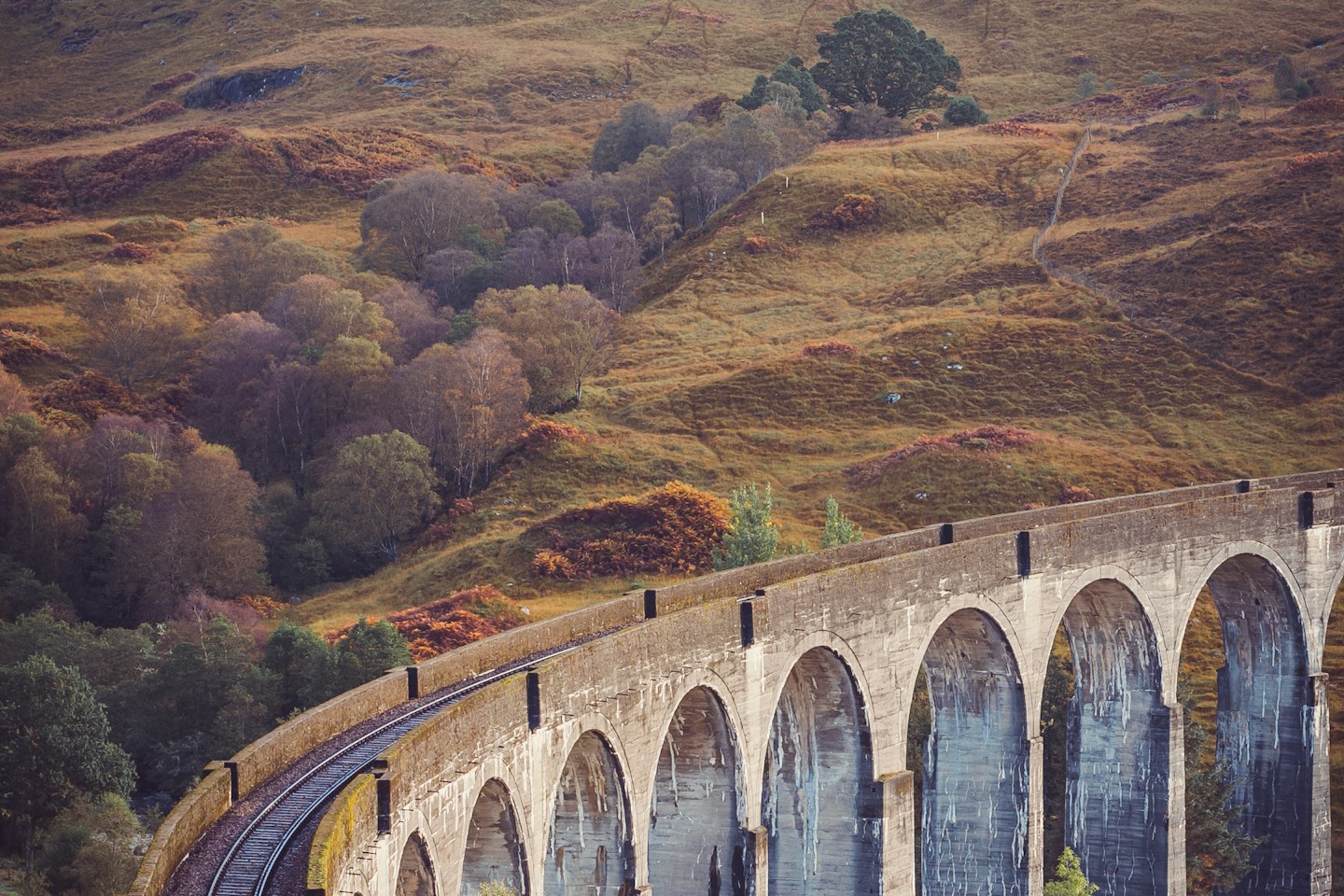
The Glenfinnan area has an identity beyond the passage of a train. If it is a significant interest, consider a properly planned stop with time to explore its public visitor setting rather than expecting a few seconds from the carriage to provide the whole experience. Check the stop's access, opening arrangements for any intended institution and the next useful train before committing to disembark. A photograph taken in anticipation is a poor substitute for a viable day.
On foot, use designated routes and respect barriers, railway property and the needs of other visitors. A view that appears close on a screen may involve uneven ground or a longer approach than expected. Weather and remaining daylight matter, particularly when the return depends on a limited service. Decide whether the goal is historical interpretation, a local walk or viewing railway engineering, and give it appropriate time. That specificity makes the stop more rewarding than joining a crowd without knowing what comes after the expected moment.
Ordinary services and special excursions are different products
A public railway journey and a separately marketed heritage or sightseeing excursion can share part of a landscape while differing in booking rules, operation and purpose. Make sure the ticket corresponds to the experience you intend. Do not infer that a photograph of one type of train describes the ordinary service you have booked. Check the actual operator and what is included before paying, especially when a particular onboard experience is central to the trip.
For the public service, understand fare restrictions, reservation arrangements and current travel notices directly through the operator. Keep essential confirmations accessible offline. If a special excursion is chosen, examine its own conditions and the practicality of reaching its departure. The most satisfying choice depends on the desired day. One traveler may value the freedom to continue to a coastal stay, while another wants a specific excursion and return. Clarifying that purpose prevents marketing imagery from silently deciding the whole itinerary.
Short daylight changes the journey's visible shape
In the colder part of the year, daylight can be a limiting factor in how much scenery is visible. Compare the intended travel time with the season rather than assuming a view-filled day from an itinerary written for summer. An evening arrival may still be worthwhile, but the route should have another purpose beyond continuous observation through the window. The destination and the following day's plans become particularly important when part of the ride will be dark.
Longer summer light offers more flexibility but does not justify ignoring fatigue or conditions. A late arrival walk should remain proportionate to the energy left after travel. Check the route and return, carry appropriate clothing and avoid improvising a hill outing because the sky still looks bright. Seasonal daylight changes the possibilities; it does not remove the need to decide what kind of walk suits the group. An easy settlement circuit can provide a better first impression than a hurried attempt to reach a distant viewpoint.
Walk the following day at the scale the train cannot show
One full day at the chosen destination allows the scenery to become more than a moving backdrop. A modest public route can reveal textures, sounds and changes of ground that the train necessarily compresses. Choose that walk from current local information, with difficulty and exposure suited to the group. An apparently accessible landscape from the carriage may contain rough, wet or remote terrain when approached on foot.
A slower day need not be entirely outdoors. A local collection, waterfront, café or settlement walk can help explain how people live with the surrounding geography. Ask about the particular place rather than treating every Highland community as a version of the same destination. The railway has connected them, but their roles and settings differ. Giving the endpoint time to establish itself is what turns an attractive transport route into a stay with a recognizable character.
Disruption needs a practical alternative
Check current service notices close to travel, including any planned engineering arrangements. Replacement transport or altered services can change luggage handling, accessibility and the character of the day. If assistance is needed, confirm how it applies to the revised journey rather than assuming the original arrangement transfers automatically. A scenic trip still operates within a working railway that requires maintenance and responds to weather and other events.
Protect connections that carry substantial consequences. Avoid making an inflexible long-distance departure depend on the last plausible link from a remote overnight base. Where necessary, return closer to the onward departure the previous day. Keep accommodation informed if a delay affects arrival and ask the operator about the actual options rather than attempting an improvised chain of doubtful transfers. A manageable contingency does not need to predict every problem. It needs to identify which commitment matters most and leave enough room to reach it comfortably.
Let the return be a second reading
A return along the same line can be worthwhile even without a new route. Familiar geography may become clearer after walking at the destination, and different light or cloud can change which features stand out. Resist treating repetition as lost time. The first ride introduces the sequence; the second can reveal relationships among places whose names and settings now mean something. Reading, conversation and simple rest also belong on a long train day.
The West Highland journey is strongest when no single view carries the entire burden of success. A photograph may be pleasing, a clear interval spectacular, but the larger experience consists of movement toward a place and time spent there. Choose the end point carefully, prepare the ordinary details and allow the scenery to vary. The result can remain memorable even when the celebrated landmark appears briefly or the mountains spend an afternoon behind cloud. The railway has still performed its essential task: it has connected the traveler with somewhere worth staying.
A few practical questions
Should the trip be planned as an immediate return?
A return day can suit some itineraries, but an overnight stay with a full day at the destination gives the long journey more depth. Choose the endpoint for its own appeal and assess the total time on board honestly.
Does booking a scenic journey guarantee the desired view?
No. Seat position, weather, light and ordinary railway conditions affect what is visible. A rewarding destination and a flexible local day give the trip a broader purpose than obtaining a particular photograph.
For current destination information, access guidance and local updates, visit the official West Highland Line travel resource. Check transport and attraction details directly before booking.
This is a general planning guide, not a live conditions report. Found something that needs updating? Send a correction.