Slovenia by bus: a compact country, a patient itinerary
Slovenia’s size can encourage an overambitious route. A bus-based visit works better when city time, lakes and one additional region are connected with generous buffers and fewer changes of accommodation.
Inside this story
Slovenia's compact outline can encourage a bus itinerary that crosses the country more often than it explores it. A capital, Alpine lakes and an Adriatic town may all appear comfortably close on a map, but bus stops, service patterns and the final walk to a room give distance a different meaning. Use the country's size to simplify the journey: fewer bases, longer stays and a clear purpose for each transfer.
Ljubljana is a useful starting point because city time can establish the pace before an outdoor stay. Lake Bled can then become a real destination rather than an image collected between buses, while Bohinj offers a separate lake setting if the trip has enough time. The coast should be added as another region, with its own substantial stay, rather than squeezed into an interval that already contains a mountain transfer.
- Ljubljana acts as a useful transport hub for many routes.
- The coast is a separate regional outing from the Alpine northwest.
- Tickets and seat arrangements should be checked with the actual operator.
The capital can absorb an arrival day
Begin in Ljubljana with enough room to arrive, find accommodation and learn the approach to the onward bus departure. The pedestrian center and riverfront can provide a modest first walk without demanding an immediate excursion. Keep the morning after arrival free of an unnecessarily early connection if the journey into Slovenia is long. A rested transfer to the lakes is more useful than reaching them quickly and spending the first afternoon recovering.
Accommodation convenience has two meanings here: access to the city you want to enjoy and access to the transport you will use. Compare both before booking. A pleasant central room may still involve a luggage walk to the bus departure, and that can be perfectly manageable when known in advance. Check the current departure point and operator instructions near travel. Do not assume a saved photograph of a station or a previous traveler's platform advice establishes the arrangement for your date.
Lake Bled begins at a particular stop
Bled is well connected with Ljubljana and surrounding places, but choose the bus by its actual stops rather than the destination label alone. Locate the stop relative to your accommodation and the lakefront section you want to explore. The walk after arrival may contain gradients or a longer route around streets than a straight line suggests. A base that suits a traveler with a car may create repeated effort for someone carrying a bag from public transport.
On the first afternoon, let Bled establish itself at walking speed. The island, castle setting and changing lake views need not all become separate activities immediately. Select a comfortable public stretch, find a meal and understand the route back to the room. Visitors with mobility requirements should investigate particular surfaces and approaches rather than relying on a general description of a lakeside walk. Being beside water does not establish that every route around it is equally level or accessible.
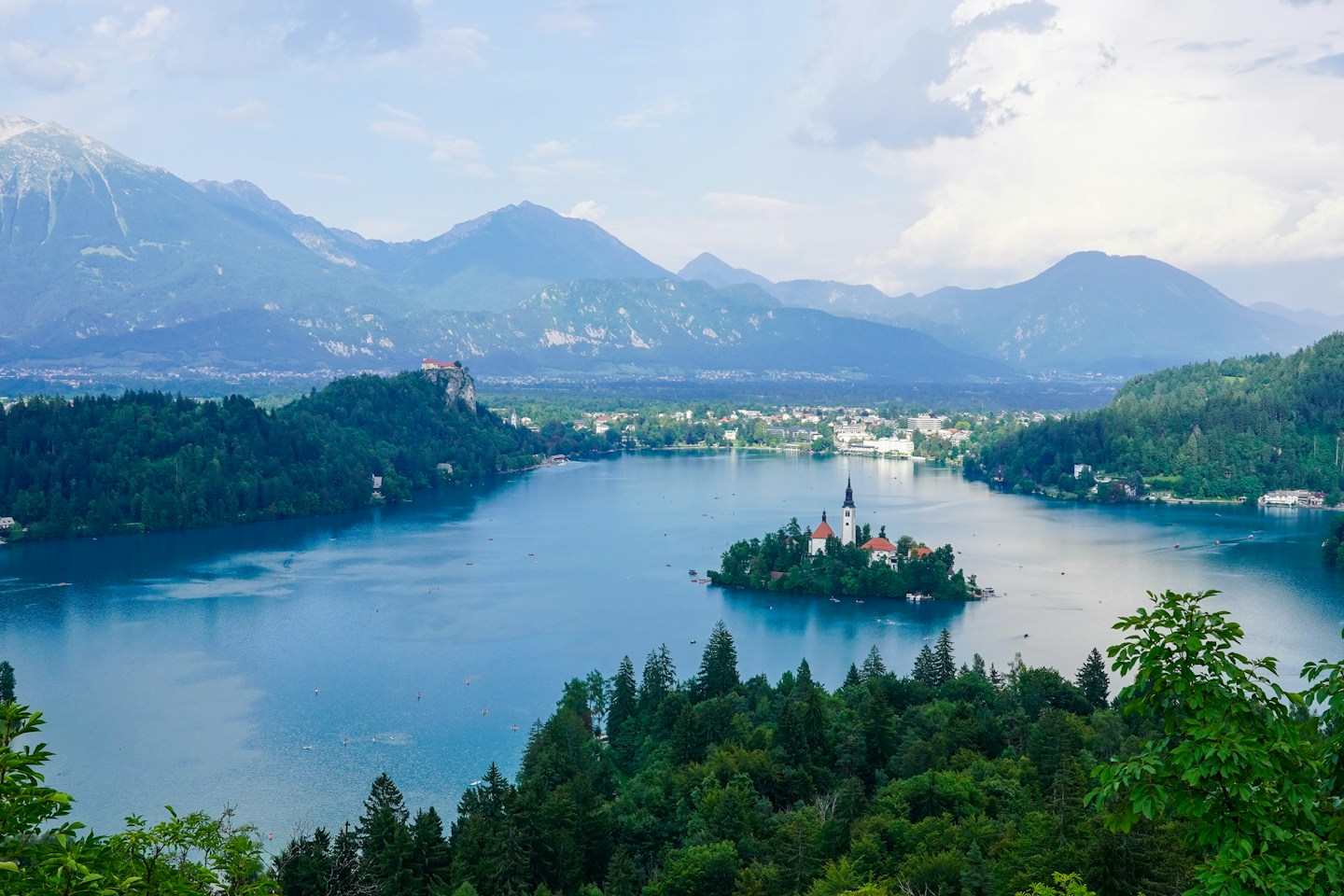
A familiar lake image contains several decisions
The celebrated view of Lake Bled can make the visit appear effortless, but each additional activity has its own practical terms. A boat outing, a castle visit or a higher viewpoint changes the day's timing and physical demands. Check the actual operator or institution for access arrangements and choose what matters most. There is no obligation to reproduce the complete sequence suggested by promotional photographs.
A good Bled day can combine one principal visit with time along the lake and an ordinary meal. Leave the farthest or most demanding outing optional, particularly when weather or energy is uncertain. Ask about current conditions before attempting an uphill path. A pleasing view does not establish that the route to it suits everyone in the group. Giving the lake more than an afternoon also reduces pressure: a change in light or visibility can be enjoyed later without forcing every decision into the arrival period.
Bohinj is another stay, not the back of Bled
Bled and Bohinj share a regional relationship, but they are distinct destinations. Bohinj's settlements, lake access points and onward mountain possibilities should be examined individually. If the purpose is a quiet lakeside stay, choose accommodation and a bus stop that support that aim. If the interest is a particular walk, determine how the trail is reached after the main bus arrives. A bus reaching the region is not necessarily a bus reaching the trailhead.
For a day trip from Bled, compare the time available on the ground with the complete return journey. For a longer outdoor visit, an overnight base may allow a more relaxed encounter. Neither choice is universally better. The question is whether the intended activities can be enjoyed without spending the day monitoring a distant stop. Keep the lake itself meaningful. It need not function only as the foreground to a mountain excursion that may be unsuitable in the day's conditions.
Read the timetable across the right calendar
Weekdays, weekends, public holidays and seasonal services can produce different possibilities. Search for the intended date and confirm the details with the actual operator or official transport source. Record the return at the same time as the outward journey. A morning departure that looks convenient does not establish a useful evening service, especially for a walk whose endpoint differs from its beginning.
Save the relevant information and exact stop names offline, including direction and any required change. A photograph of a timetable is useful only if it applies to the date and service in question. Give transfers enough room for a delayed arrival, finding the next stop and managing luggage. Where possible, plan only one major accommodation transfer in a day. This turns a missed departure into a manageable revision rather than the first failure in a chain of connections whose final destination becomes increasingly difficult to reach.
The Adriatic coast needs a regional chapter
Adding the coast can create an appealing contrast with the lakes, but it should be treated as a move into another regional setting. Decide where to stay and how the onward connection reaches that particular town. The last bus stop may not be beside an old-town room, and narrow streets or steps can affect the luggage approach. Ask accommodation staff for precise arrival instructions before committing to a late service.
Give the coastal stay enough time to justify the transfer. A waterfront walk, a cultural visit and a meal can be enjoyed without treating the region as a beach interlude that must fit every season. If the total trip is short, choosing the capital and one outdoor region may be more rewarding than adding the coast. The country does not become better understood merely because the route touches its different edges; each setting needs time to establish its character.
Luggage determines whether a stopover works
A bus transfer with sightseeing in the middle can look economical, but it depends on a confirmed storage arrangement. Do not assume that a bus station, hotel or attraction will hold bags simply because it lies conveniently on the route. Check the facility's operation, permitted items and access times. If storage is uncertain, continue to the overnight base and explore from there rather than carrying a suitcase through a museum or lakefront afternoon.
Pack for repeated lifting and short walks as well as the main journeys. Keep tickets, water and weather protection accessible without opening the whole bag. Ask the operator about luggage arrangements and any restrictions relevant to your equipment. Travelers needing boarding assistance should confirm the particular service's facilities. A general promise of bus access cannot establish whether a specific vehicle and stop meet an individual requirement. These questions are easier to resolve before arrival than while a queue is forming at the door.
Outdoor transport does not decide outdoor safety
A bus can make an Alpine destination reachable without making every nearby route suitable. Assess the intended walk separately for ground, elevation, exposure and current conditions. Consult official local or park information when appropriate, and choose a turnaround that leaves a realistic return. The final bus should not become an incentive to hurry across difficult terrain or continue when the group is uncomfortable.
Build a lower-level option into a lake stay and a museum or city interval into the wider journey. Rain in the mountains need not force another hotel move. A longer stay creates chances for conditions to improve while the surrounding settlement provides a different subject. If the plan includes a higher route requiring additional local transport, confirm its current operation and the link back to the main line. A saved image of a cable car or shuttle is not evidence that it will run on the intended day.
Use Ljubljana again only when it helps
Returning through the capital can be sensible even if a circular route appears neater. A familiar base can simplify a regional change, provide a weather buffer or place the final night closer to an onward departure. The important question is whether the return supports the experience rather than merely adding another packing cycle. If it does, give the city something new to offer: a collection, a neighborhood walk or an unhurried evening after the outdoor stay.
By departure, the route should have distinct chapters. Ljubljana offers an urban scale, Bled a particular lake setting, Bohinj another if included, and the coast a different regional relationship. Buses make these chapters possible, but the visit should not be remembered primarily as a collection of transfers. Fewer moves give ordinary details time to become familiar: the approach to a stop, a lakeside stretch in changing weather or a place to eat after returning. That familiarity is one of the strongest advantages of traveling patiently through a compact country.
A few practical questions
Should Bled and Bohinj always be visited on the same day?
Treat them as separate destinations and compare the actual travel time with your interests. A short visit may focus on one lake; a longer stay can give each enough time without using every daylight hour for transport.
Is a car-free trip limited to Ljubljana?
No. Bus connections support travel to several regions, but suitability depends on the particular date, stop and last-mile approach. Plan around destinations with workable local access rather than assuming every remote viewpoint is equally convenient without a car.
For current destination information, access guidance and local updates, visit the official Slovenia travel resource. Check transport and attraction details directly before booking.
This is a general planning guide, not a live conditions report. Found something that needs updating? Send a correction.