Seoul at neighborhood speed
Seoul’s scale becomes manageable when a day has one geographic center. Combine a palace area with nearby streets, then give a different district its own time on another day.
Inside this story
Seoul's size is easier to manage when each day has one geographic center. A palace and nearby older streets can form one outing; a contemporary design area or the Han River can supply another. The subway connects those experiences, but it does not make them interchangeable stops on a compact walking loop. Choosing a district and remaining long enough to understand its scale produces a more coherent visit than repeatedly crossing the city for individual attractions.
This approach leaves room for Seoul's strongest contrasts. Formal palace spaces, market passages, residential lanes, large transport interchanges and open river parks all ask for different kinds of attention. Give those settings distinct roles. A smaller radius within each day makes spontaneous meals and pauses easier, while preserving the energy needed to appreciate a city whose abundance can otherwise become an exhausting logistical challenge.
- Jongno brings palace areas and older urban streets within a workable day plan.
- Subway journeys include station entrances and underground walking as well as train time.
- Seasonal heat or cold should influence the balance between indoor and outdoor stops.
Jongno offers a coherent first chapter
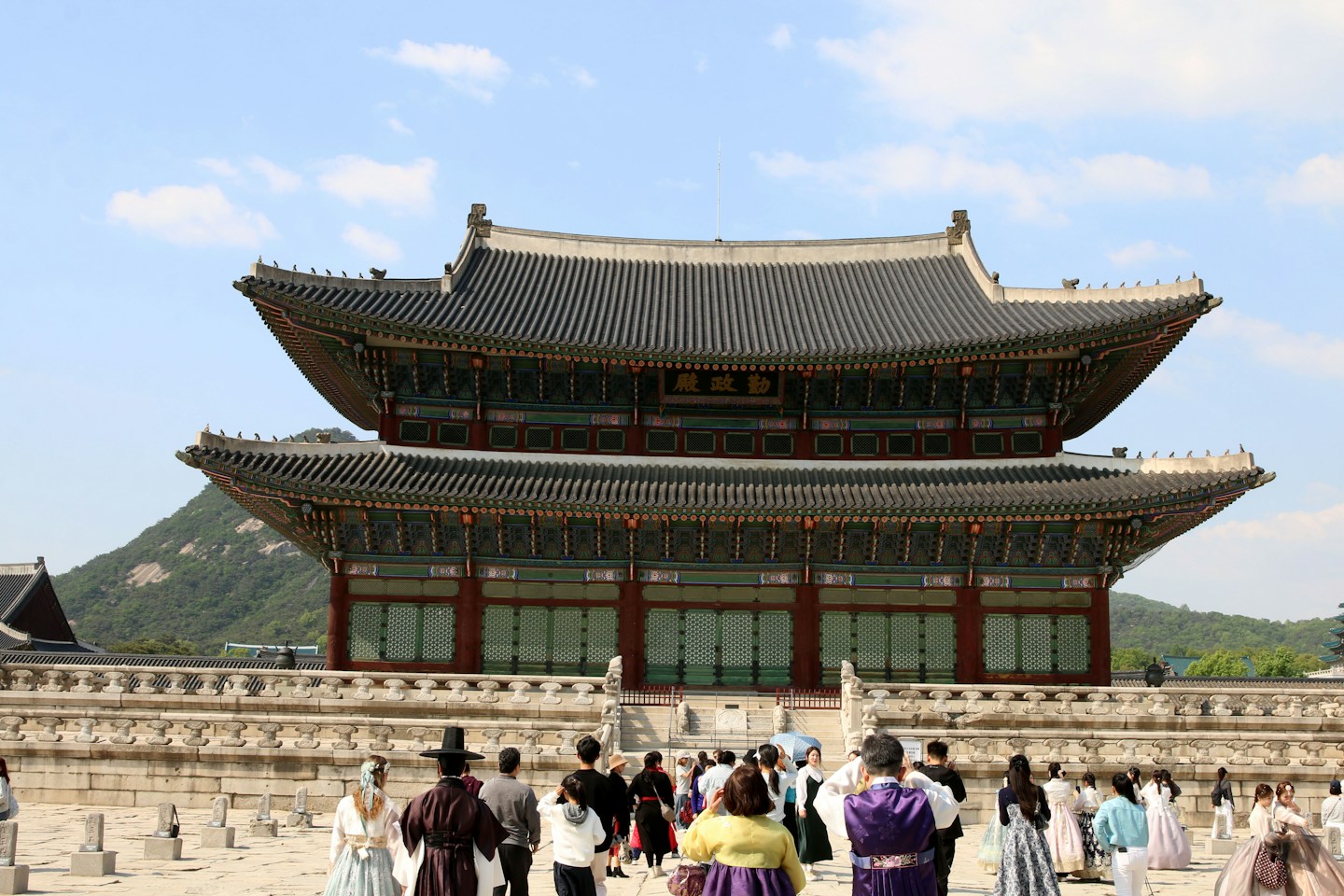
Jongno brings palace areas and older urban streets within a workable day plan. Begin with the cultural place that matters most to you, verify current access arrangements and let the surrounding walk develop afterward. A palace visit deserves enough time to read the layout, understand the sequence of spaces and look beyond the entrance photograph. Its scale may be greater than expected, especially when substantial outdoor walking is involved.
Do not schedule another major institution immediately after it simply because both appear close on the map. Entrances, crossing points and the desire to stop for food occupy time too. A nearby meal provides a useful transition from formal cultural space to the streets around it. If you are traveling with companions, discuss whether the afternoon should remain historical or become a looser neighborhood walk. That decision helps avoid a day in which concentration quietly gives way to fatigue.
Seasonal conditions matter. An outdoor palace route in heat, cold or rain can feel very different from the same visit in mild weather. Place the most exposed activity in the most comfortable available period and keep an indoor option nearby. The goal is not to preserve a perfect sequence at any cost. It is to give the important place a fair share of attention while everyone remains able to enjoy it.
Bukchon requires attention to living space
Bukchon includes homes as well as places that attract visitors. Quiet lanes are appealing precisely because they remain residential, which makes consideration essential. Follow current access signs and local restrictions, keep voices low and stay away from private thresholds. A narrow lane is not a suitable place for an extended group discussion or repeated photograph arrangements when people need to pass through it.
Appreciate buildings from public routes without entering courtyards or pointing a camera into domestic interiors. If a route is restricted, use another clearly public street rather than looking for a way around the boundary. A neighborhood visit does not need unrestricted access to be meaningful. Architecture, changes in level and the relationship between larger roads and smaller lanes offer enough to notice without turning private life into part of the itinerary.
Keep this outing modest in length and pair it with a definite rest stop elsewhere. Visitors who remain too long while searching for an ideal image can contribute to the very pressure that makes access difficult. An attentive, respectful walk may be short. Its quality comes from what you notice and how you behave, rather than the number of lanes completed. Use official visitor guidance to understand current expectations before entering the area.
Read the subway as a sequence of spaces
A subway journey includes more than time on a train. Getting into the station, finding the correct platform, transferring and reaching the right street exit can all require substantial walking. Large interchanges deserve particular attention when luggage or mobility needs are involved. Check the exit nearest the actual destination before traveling. The wrong surface exit can add an inconvenient crossing or a long outdoor detour to an otherwise straightforward journey.
Choose accommodation through the connections useful to your selected districts. A room near a station can still involve a tiring final approach or an inconvenient line change. Examine the exact route, including building access, rather than relying on a broad promise of centrality. For arrival, save the address clearly and keep practical directions available without depending on a continuous connection. The first journey is easier when the final few minutes are understood.
Public transport makes it possible to move widely, but that possibility should not dictate every day. Return to the accommodation area for an evening meal when the outing has already involved a long transfer. Familiar surroundings reduce the effort of choosing food and navigating afterward. A city as varied as Seoul does not need every evening to be another excursion. Local repetition can provide a welcome thread through otherwise contrasting days.
A market is a meal with a method
A market visit is easier when you arrive hungry and ready to observe how service works. Look at where people order, how seating is used and whether payment happens before or after the food. Different stalls may follow different arrangements. Ask politely when uncertain instead of carrying assumptions from one place to the next. Understanding a simple process makes it easier to relax and appreciate the food and activity around you.
Choose a few questions or preparations that interest you. A focused encounter with one dish can be more memorable than trying small portions of everything while continuously moving. Ask about ingredients where dietary restrictions require clarity. Appearance and a translated name may not provide enough information. If a seller cannot answer in a way you understand, choose a clearer option rather than guessing. Appetite is better served by confidence than by pressure to be adventurous.
Markets are working places. Keep passageways clear, ask before making close photographs of people and step aside before discussing the next order. Personal belongings and shared space deserve ordinary attention. The surrounding activity is part of the experience, but it does not exist solely for observation. Buying something suitable, eating where permitted and following the local rhythm create a fuller encounter than treating the market as a visual stop between museums.
Water gives two very different scales
Cheonggyecheon supplies a lower-level walking route through part of the center. It can offer a change from traffic and larger streets, but reaching and leaving it involves access points that should fit the intended route. Choose a manageable section rather than assuming the whole feature belongs to one walk. Weather and current notices matter, especially when conditions make a lower water-adjacent space unsuitable. Follow local instructions on arrival.
The Han River parks are a different proposition. They are substantial destinations, not brief additions to a central sightseeing route. Select the area according to the experience you want and the transport connection that serves it. An open riverside afternoon may involve longer distances, more exposure and fewer immediate shortcuts than a central stream walk. Look at the return before setting off, especially if the group expects an evening appointment elsewhere.
Give each water setting its proper role. Cheonggyecheon might break up a central day, while a Han River outing could occupy the main afternoon on another day. Neither needs to be stretched to match an imagined complete experience. A short comfortable walk and a well-chosen place to pause can be enough. The contrast with dense urban streets is valuable in itself, and it becomes clearer when you are not rushing to reach the next district.
Contemporary design and mountain edges
A contemporary design space can add a useful counterpoint to the palace districts. Choose according to the actual exhibition or program, checking current arrangements directly. Architecture may be part of the appeal, but time inside can explain a different city story from the historical areas. Keep the surrounding itinerary close enough that the visit has room to expand if the subject interests you more than expected.
Mountain viewpoints require another decision entirely. Proximity to a large city does not turn an uphill route into ordinary pavement walking. Assess footwear, weather, exposure and the intended path before committing. A viewpoint photograph gives little information about the approach. If conditions or ability do not suit the route, choose an urban alternative without trying to recover the same experience through an improvised shortcut. The city offers ample variety at lower levels.
Avoid placing a demanding climb after an already full cultural day. An early start, sustained walking and a late transfer can accumulate into fatigue even when each individual activity looks reasonable. A balanced sequence might place a mountain outing on its own day with a nearby meal afterward. Good planning lets an energetic traveler enjoy that choice while preserving a satisfactory alternative for someone who prefers an indoor collection or a gentler walk.
Let weather influence the daily radius
Seoul's seasonal heat and cold should influence the balance between indoor and outdoor time. A route designed entirely through map proximity may expose you for longer than expected, particularly around palaces and broad river spaces. Place warm or cool indoor pauses where they can actually help, and keep meals geographically convenient. Comfort is part of being able to notice a city rather than simply endure the distance between activities.
Consult official Seoul visitor information for district context and current local guidance, then confirm institution and transport arrangements directly. A first stay can use Jongno for one chapter, another district for contemporary culture and a separate river afternoon. The subway connects those chapters, while local meals give each a natural ending. Seoul remains large and varied, but a thoughtful daily radius turns that scale into a source of discovery rather than a schedule to conquer.
For current destination information, access guidance and local updates, visit the official Seoul travel resource. Check transport and attraction details directly before booking.
This is a general planning guide, not a live conditions report. Found something that needs updating? Send a correction.