Lisbon beyond the postcard viewpoint
Lisbon makes more sense when you plan around its hills. Pair a waterfront stretch with a single upper neighborhood and leave enough energy for the walk home.
Inside this story
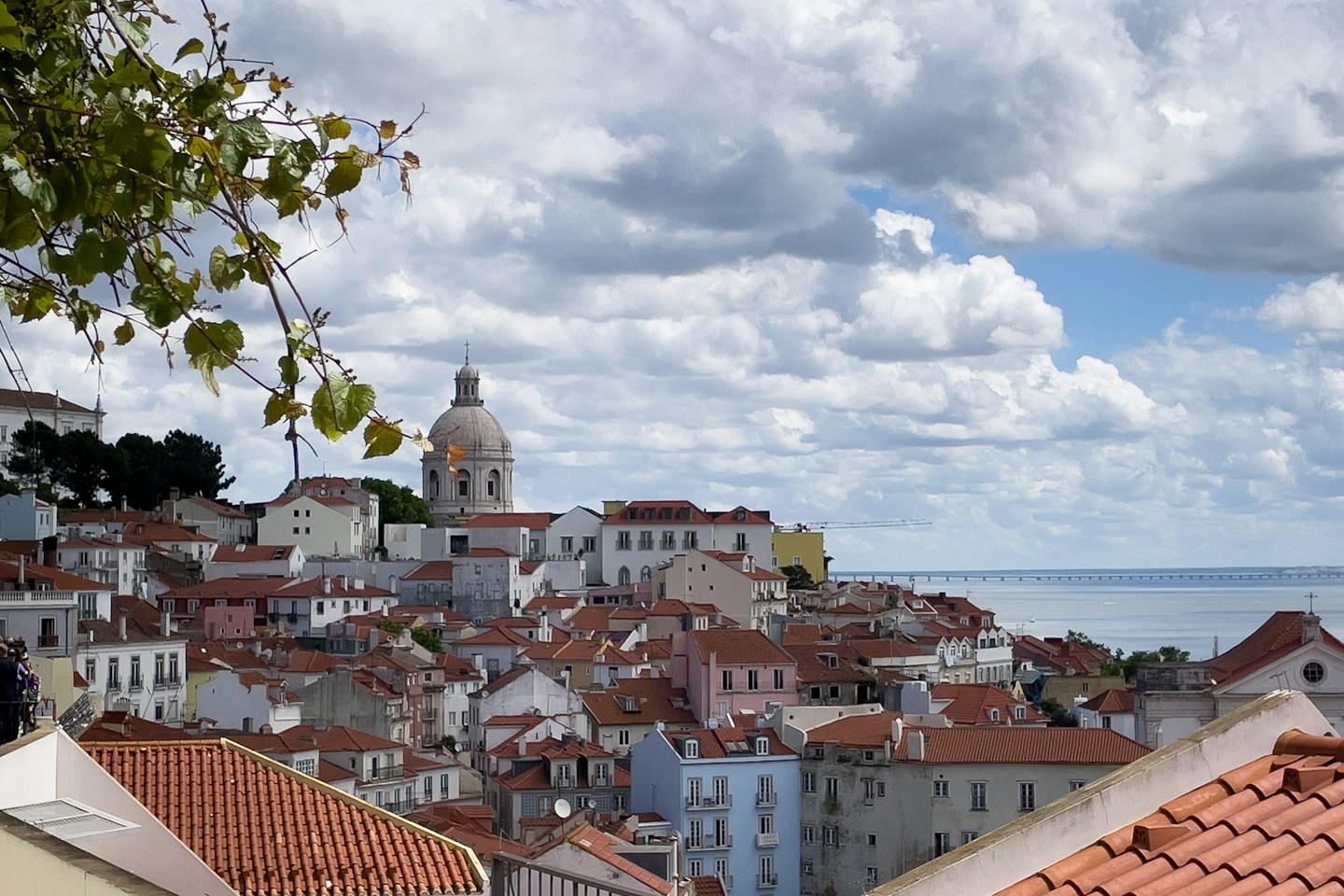
Lisbon's hills are beautiful from a distance and very real underfoot. They determine which neighborhoods fit together, how much energy remains after lunch and whether an apparently nearby restaurant feels close at the end of the day. A satisfying visit takes that vertical geography seriously. Use the lower city to find your bearings, give an upper neighborhood a defined outing, and let the Tagus waterfront provide a different walking rhythm.
The familiar images then become parts of a larger experience. A tram passing through a narrow street, tiled façades and a broad river view become more interesting when connected to places people live and work. Lisbon rewards looking carefully at a modest route. It asks for less exhaustive movement than the concentration of marked viewpoints on a visitor map might suggest.
- The Baixa grid is an easier orientation point than the twisting lanes above it.
- Public trams are transport used by residents, so luggage and queues affect everyone.
- A museum afternoon pairs well with a short evening walk rather than another full hill circuit.
A lower-city introduction
Baixa's street grid offers a useful introduction to a city whose upper lanes can be difficult to read. Walk several blocks without trying to visit every marked building. Notice how regular streets lead toward the river and how the surrounding slopes enclose them. This framework makes later journeys easier to picture. It also provides recognizable meeting places if companions want different amounts of shopping, coffee or architectural detail during the same morning.
An initial walk here is an opportunity to assess surfaces and footwear. Attractive paving can be uneven or slippery when wet. Shoes chosen for an urban stroll should still hold securely on slopes. Travelers using mobility aids should inspect their exact routes: central and walkable say little about gradients, steps or crossings. The most comfortable journey may involve a deliberate transit connection instead of the shortest line on the map.
Leave the arrival afternoon light enough to learn practical details. A meal close to the accommodation, a brief waterfront walk and a clear understanding of the nearest useful transport stop may be more valuable than immediately climbing through several neighborhoods. Lisbon feels easier once the return journey is familiar. That investment pays off on evenings when everyone has less energy for navigation, especially after an outing that proved more demanding than expected.
Alfama without a compulsory circuit
Alfama invites wandering, but the word conceals how demanding its lanes can feel. Changes of direction, steep paving and small passages mean nearby points take longer to connect than distance suggests. Choose a general destination and let the route unfold around it. Keep an offline map or written accommodation address available, while accepting that a sensible detour may be preferable to another steep staircase. Asking for directions works best when you can show where you want to go.
The neighborhood is residential as well as celebrated. Laundry, doorways and shared spaces belong to ordinary life. Photograph buildings from public streets without entering private courtyards or aiming into homes. Move aside for deliveries and residents; avoid making a narrow passage the discussion point for the whole group. Courtesy works best before someone needs to request it. The neighborhood's appeal survives perfectly well without treating its private spaces as visitor facilities.
Food can help structure the walk, but avoid placing a distant timed attraction immediately afterward. An upper-neighborhood outing works best when it finishes naturally according to weather and energy. If the climb has already been substantial, use an easier return or end with a nearby meal. There is little benefit in preserving a circular route merely because it looked tidy during planning. Let the neighborhood's actual shape govern the afternoon.
Choose a viewpoint that explains the city
Graça offers an elevated setting whose interest extends beyond a panorama. Local streets, the approach and places to sit all shape the experience. Choose one viewpoint because it suits the day's geography, then give it time to make the city legible. Identify the river, the lower grid and the slopes you walked. That act of orientation can be more satisfying than collecting a succession of similar photographs from slightly different angles.
Repeated climbs consume time that could support a deeper visit elsewhere. The views differ, but physical effort accumulates. For a group with mixed energy levels, make the elevated outing the day's principal walk and pair it with something gentler. A museum or level stretch beside the Tagus provides an effective counterweight. This lets everyone take part without asking the least energetic traveler to spend the afternoon catching up.
Wind, cloud and sun change an exposed overlook. Bring a layer when conditions suggest it, and do not assume sheltered lanes predict the temperature at the top. Leaving before everyone becomes tired or cold keeps the pause enjoyable. A viewpoint should create a clear memory of Lisbon's setting. It need not become the place where a rigid schedule starts to unravel because the group has underestimated the climb and still has another appointment to reach.
Belém deserves a journey of its own
Belém lies west of the central neighborhoods. It works better as a planned excursion than an addition to a long hillside day. Select the cultural or architectural visit that interests you most, confirm its arrangements and build a waterfront outing around it. The district contains enough to justify restraint. One substantial interior visit and unhurried time outside can feel complete without requiring movement between several queues and entrances.
Before leaving central Lisbon, establish the return connection and an alternative if the intended service is disrupted or crowded. Include walking at both ends, not just time aboard transport. A family with a pushchair or someone who finds prolonged standing difficult experiences the journey differently from a solo traveler carrying a small bag. Practical comfort should shape the excursion from the beginning rather than become a problem solved only when everyone wants to return.
The waterfront gives Belém a broader spatial rhythm than Alfama's lanes. Enjoy that contrast consciously: look toward the Tagus instead of treating it solely as scenery between monuments. Rain might make an indoor collection the stronger anchor, with a short walk afterward. Pleasant conditions may justify remaining outside longer. Belém can feel distinct from the center without following an inflexible sequence, and the journey becomes more rewarding when there is time to notice the change.
Trams, luggage and the final climb
Public trams serve everyday journeys as well as visitors. Their visual appeal does not remove questions about queues, personal space and luggage. Check current routes and ticket rules with the operator before making a particular service essential to the day. If a vehicle is crowded, consider another connection or time. A planned ride need not become a prolonged wait that consumes the best part of the morning and leaves everyone impatient.
Choose accommodation through the connections you expect to use. Being close to a tram line can be less helpful than it sounds if the room requires a demanding final climb or the service poorly connects the chosen districts. Examine the final approach and ask about steps inside the building. Arrival and departure deserve special attention because luggage makes ordinary gradients more consequential. A precise address tells you far more than a promise of a central location.
Walking downhill requires energy and stable footing too. Transport uphill may help, but it should not create an unexamined descent through steep paving after a tiring dinner. Inspect the whole journey. When choosing between meal locations, the one near the accommodation may leave a happier memory than a celebrated address across town. Good planning gives enjoyable moments a comfortable ending, which often influences how the entire outing is remembered.
Tilework and the art of looking slowly
Ceramic tile is among Lisbon's most rewarding street details. Distinguish a patterned surface from the building around it: windows, balconies and doorways give the façade its scale. There is no need to enter a private courtyard to appreciate that visual language. Public streets reveal considerable variety when the pace allows looking upward without blocking others on a narrow pavement. Put the camera away occasionally and let the whole building occupy your attention.
A collection devoted to the city or its decorative traditions can explain what you see outside. Give it a clear place after breakfast or lunch rather than at the exhausted end of the afternoon. Verify current opening arrangements directly. A museum becomes particularly useful when rain makes a long route uncomfortable, but it deserves enough attention to contribute to the visit's story. Looking at materials indoors can change what catches your eye on the return walk.
Meals provide equally useful structure. Read menus, ask about unfamiliar preparations and sit down. A simple lunch between nearby activities sustains an afternoon better than continuous grazing while climbing. If food matters especially to you, plan one meal carefully and leave another flexible. This keeps every hour from becoming dependent on restaurant reservations and transfers. The most memorable table may be the one where the group had enough time to relax and talk.
Plan days in contrasting levels
For a short stay, think in contrasting days. One can combine Baixa and a single upper neighborhood; another can belong to Belém and the river; an additional day might give Graça or a chosen museum more room. Weather changes are easier to accommodate when each day has a clear purpose without depending on a complicated sequence of distant appointments. Leave a gap after the main activity instead of filling every remaining hour in advance.
Consult Lisbon's official visitor resources for cultural information and neighborhood planning, then confirm arrangements with operators or institutions. Preserve the option to remain somewhere that proves interesting. The city becomes clearer when lower streets, upper neighborhoods and the waterfront connect in your mind, each with distinct demands. A visit organized around those relationships gives its famous views a setting, and leaves enough energy to enjoy the streets between them.
For current destination information, access guidance and local updates, visit the official Lisbon travel resource. Check transport and attraction details directly before booking.
This is a general planning guide, not a live conditions report. Found something that needs updating? Send a correction.