The Loire by bicycle: one manageable stretch
A Loire cycling trip becomes more enjoyable when its scope matches the riders. Choose a manageable section, keep luggage light and balance château visits with the simple pleasure of following the river.
Inside this story
A Loire cycling holiday does not have to follow the river for hundreds of kilometers to feel like a journey. One manageable stretch can contain changing riverbanks, village streets, vineyards, gardens and a château visited with enough time to understand it. The useful measure is the day the riders will actually enjoy, including stops and luggage, rather than the distance a fit person could cover without dismounting.
Choose a section around a few genuine interests and give the bicycles a practical role in connecting them. Tours can provide an urban starting point, while the surrounding region offers several possible directions. Chenonceau is a particularly rewarding reason to think beyond a simple line along the Loire: the château stands on the Cher, so reaching it belongs to a different river relationship. A deliberate detour can be the heart of a visit when it is planned as a destination instead of an extra.
- The Loire cycle network covers far more ground than a short holiday can comfortably ride.
- A flat-looking map does not account for wind or a tired rider.
- Village food stops need checking because opening hours may not match a cycling schedule.
Choose the riders' day before the route's length
Discuss the distance everyone can comfortably repeat, not merely the longest ride each person has ever completed. Several days with luggage feel different from a single excursion from home. Include the least experienced rider in decisions about road traffic, surfaces and navigation. A route with attractive stops and short stages can offer a substantial experience without making every evening a recovery period. Nobody benefits when a holiday's pace is set by the person least willing to admit fatigue.
Estimate a day in blocks: leaving accommodation, riding, stopping, visiting, eating and finding the next room. That reveals why a modest distance can still fill the available time. Wind and heat can alter the effort even where gradients look mild. If the first day is a rental collection and equipment adjustment day, shorten it accordingly. Treat the initial ride as an opportunity to discover how the bicycles and group actually move together before making the following stages more ambitious.
Tours can be a beginning with substance
A start in Tours is useful when the city is given time of its own. Arrive early enough to collect equipment without also needing to reach a distant overnight stop. A short familiarization ride can establish saddle comfort, braking and the handling of loaded bags. Then enjoy the streets on foot, leaving the bicycle securely stored rather than turning every urban visit into another parking problem.
The urban beginning also helps separate tasks. Obtain anything needed for the route, confirm the first accommodation's bicycle arrangements and understand how the day's exit works. Study the route through and beyond built-up areas rather than assuming the river will always be visible or that every junction is self-explanatory. A successful departure is the point at which a workable route, comfortable equipment and a realistic stage align. It is not necessarily the earliest possible start or the departure with the greatest number of kilometers remaining.
Chenonceau belongs to the Cher
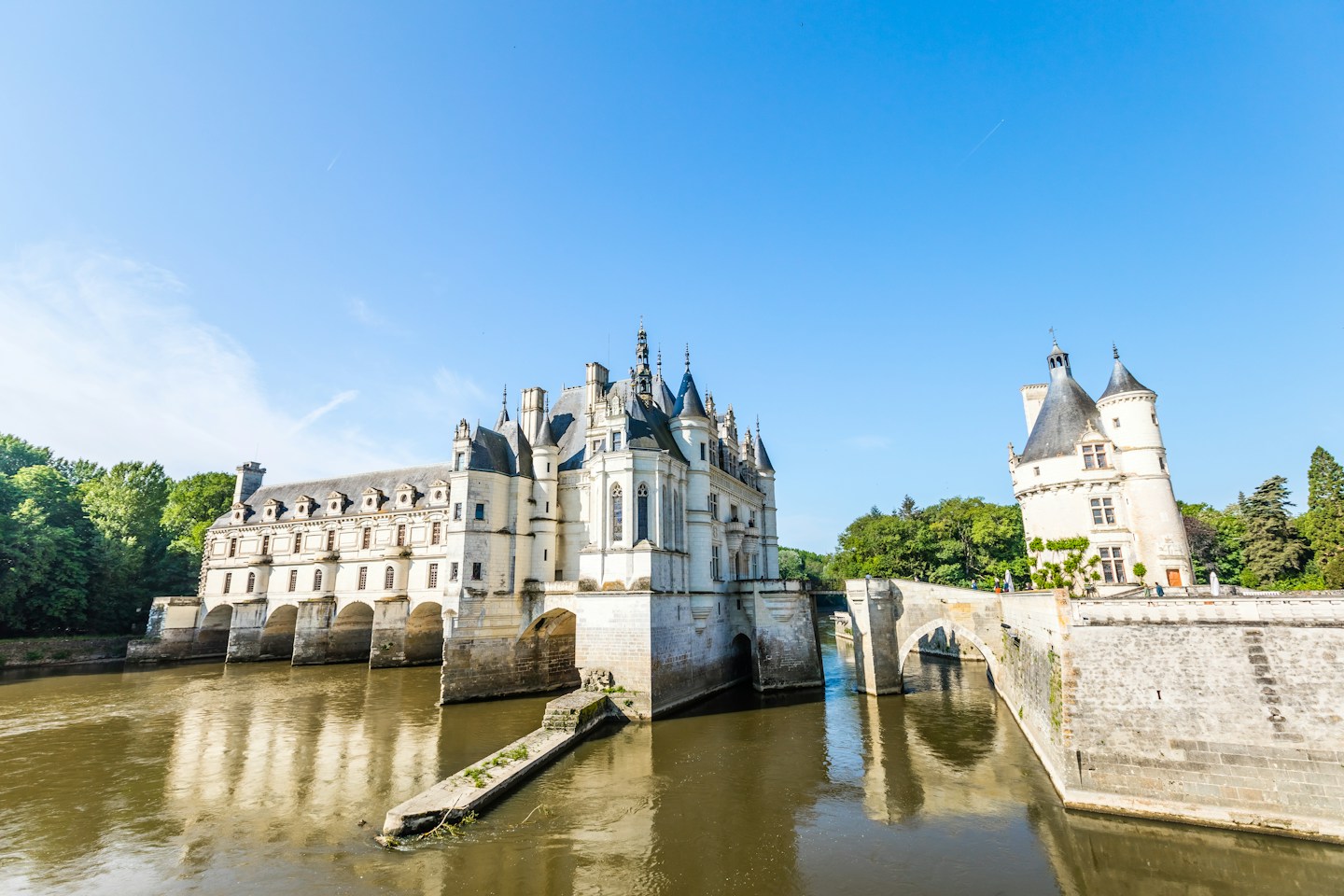
The Château de Chenonceau is often grouped into a general Loire Valley itinerary, but its immediate setting is the Cher. That distinction matters to cyclists. The visit should be connected through a suitable route in the relevant corridor rather than imagined as a brief stop directly on every Loire ride. Consult current local cycling information for the approach, and decide whether the château is an excursion from a base or a stop between overnight stays.
At Chenonceau, the relationship between building and water deserves attention beyond the familiar exterior view. Look at how the structure occupies the river setting, then allow time for the interiors and grounds that interest you. Check the current visitor arrangements before fixing the day's riding. Locking the bicycle, reaching the entrance, visiting and returning to the road take substantially longer than the time spent inside one room. This is a cultural visit with cycling attached, and the stage should be designed to give it that status.
Gardens change the rhythm of a château day
A château is not only an interior to be completed before the next departure. Grounds and gardens can occupy a large part of the visit, with a different walking rhythm from the ride. Decide whether the priority is architecture, collections or landscape, and resist treating every component as compulsory. A shorter selection explored carefully can provide more understanding than a full circuit conducted while calculating the distance to dinner.
Cycling clothes and luggage require some forethought on such a day. Ask about bicycle parking and any storage limitations rather than assuming a ticket includes a convenient place for panniers. Carry what is needed for the visit without leaving essential documents or valuables unattended. Plan food around the institution's actual options or a confirmed nearby alternative. A comfortable break can help both the cultural visit and the afternoon ride, while a missed lunch can make the same distance feel much longer.
The river is a landscape, not a continuous cycle lane
A river-based route can alternate among dedicated paths, quiet roads, settlement streets and other surfaces. Check the specific section instead of inferring conditions from the route's name. Temporary diversions or changes after weather may affect the experience. Follow current signs and official route information, and do not improvise across private land because a line near the water appears more direct. The most scenic-looking bank may not provide a suitable public connection.
Notice how the landscape changes between water, cultivated ground and villages. River islands, broad banks and flood-management structures can be interesting without requiring a detour onto every track. Stop where bicycles and people can stand clear of moving traffic. Looking becomes more rewarding when the group is not trying to interpret the surroundings while negotiating a junction. A few deliberate pauses give the landscape a place in the day instead of leaving it as a blur between château entrances.
An overnight stop has to work for bicycles and people
Confirm secure bicycle storage before booking a room, especially when using valuable rentals or electrically assisted bicycles. Ask where charging is possible if relevant and whether the bicycles must be carried over steps. A statement that cyclists are welcome does not settle every detail. The ideal stop makes arrival simple enough that there is time to wash, change and enjoy the village or town before dinner.
Food access matters particularly in smaller places. Check whether an evening meal is available on the intended date and what happens if arrival is later than expected. A beautiful isolated property can work well when catering or transport is arranged, but it may be inconvenient for a group relying entirely on the bicycles. Keep the final part of the stage modest. Searching for an entrance or climbing an unexpected approach is more demanding after a day when all of the nominal distance has already been completed.
Rail is an option only after bicycle rules are checked
A railway connection can shorten a ride or allow a one-way itinerary, but bicycle carriage requires its own investigation. Service type, date, available space and reservation requirements can affect what is possible. Check the actual operator and train before treating rail as a guaranteed escape from bad weather or tiredness. A ticket for the rider does not necessarily establish that the bicycle can travel on the same departure.
With rental bicycles, ask whether returning equipment at a different location is allowed and what the arrangement costs. A route should not end far from the agreed return point on the assumption that flexibility will be granted. If several riders and bicycles must board together, leave time for the station approach and loading. A short, carefully checked rail link can be extremely helpful. It becomes less useful when the group first studies its conditions after arriving at the platform with nowhere else to go.
Carry tools that somebody can use
A repair kit should match the bicycles and the riders' practical skills. Ask the rental provider what is supplied, how to contact assistance and what to do after a puncture or mechanical problem. Check the equipment before leaving the collection point. Carrying unfamiliar tools creates the appearance of preparation without ensuring that anyone can solve a problem. Know which small repairs the group can manage and which require outside help.
Packing light improves handling, but essential weather protection, water and personal items still need to fit the route. Balance loads securely and test them on the first short ride. Keep navigation accessible without holding a phone while moving. If rain or wind makes the planned stage unsuitable, use a confirmed alternative rather than treating the schedule as a challenge to be endured. The value of the holiday lies in the places and movement, not in preserving a daily distance regardless of conditions.
Leave a rest afternoon inside the route
A rest interval can have a subject: a town walk, a garden or a return to a riverbank without panniers. It need not be filled with a distant excursion. On a multi-day ride, this change of pace helps different levels of fitness remain compatible and gives the region a scale beyond the saddle. It also provides room for laundry, equipment adjustments and practical tasks that otherwise intrude into every evening.
By the final stage, the route should feel like a sequence of places rather than a test of accumulated mileage. Tours can be remembered as a real city, Chenonceau as a building understood in relation to the Cher and smaller stops as settings where an ordinary meal or conversation mattered. Those distinctions emerge when the stages leave room for attention. A short section ridden well can reveal more of the Loire region than an ambitious line completed with little energy left to look at it.
A few practical questions
Does a château visit count as a rest stop?
It changes the activity, but can still involve substantial walking and time on your feet. Shorten the riding around an important visit and leave room for food, bicycle parking and the approach to the entrance.
Should the whole group ride the same daily distance?
Plan a shared distance that everyone can repeat comfortably, then add optional local riding only where logistics allow. A suitable common stage makes the experience easier than repeatedly dividing the group around exhaustion or missed visits.
For current destination information, access guidance and local updates, visit the official Loire Valley travel resource. Check transport and attraction details directly before booking.
This is a general planning guide, not a live conditions report. Found something that needs updating? Send a correction.