Kerala by water and rail, with a gentler pace
Kerala offers several kinds of slow movement, from local ferries to intercity trains. Connect a few places thoughtfully, and distinguish everyday transport from private leisure trips on the water.
Inside this story
Kerala's waterways invite a kind of travel that differs from simply moving slowly. A ferry follows the needs of the places it serves; a private boat can be arranged around a visitor's interests; an overnight houseboat creates a temporary place to stay on the water. These experiences may share a landscape but have different purposes, responsibilities and practical conditions. Understanding the distinction is the beginning of a better itinerary.
Combine a few places rather than attempting to sample every coastal, backwater and hill setting in one trip. Kochi can provide an urban introduction, Alappuzha a base for examining different water journeys, and rail a means of connecting substantial stays. Leave enough time on shore to understand what the boats pass: homes, working land, landing places and settlements whose lives do not begin when visitors board.
- Kochi provides an urban introduction to the coast’s trading history.
- Monsoon conditions can change the appeal and operation of water-based outings.
- Fewer hotel changes leave time to observe everyday waterfront life.
Kochi introduces a coast with several centers
Kochi is not a single compact waterfront district. Decide which part of the city supports the interests and transport you intend to use. A stay oriented toward historic neighborhoods offers a different daily rhythm from one chosen primarily for railway access. Fort Kochi and Mattancherry can provide a framework for exploring trading connections and built heritage, but the approach from a mainline station is another journey. Include that transfer when comparing arrival options.
Give an urban day a limited geographic scope. Select a cultural interior, a public waterfront stretch and a meal in the same general area rather than crossing repeatedly between districts. Religious and historic sites have their own access instructions, and commercial streets remain workplaces. Notice how goods, buildings and water relate without treating every shopfront as a stage for photography. A modest route with time for explanation can establish context that makes later travel through the backwaters more meaningful.
Railway names require exact attention
A broad city name on an itinerary may conceal a choice among stations and different final approaches. Confirm the station used by the chosen service, the onward transfer and the accommodation's arrival instructions. Check reservation arrangements through the actual railway booking channel rather than assuming that any ticket allows travel on any train. Keep identity documents and confirmations accessible according to the requirements of the booking.
A rail transfer can be the main event of a day without needing another substantial excursion afterward. Pack water and essentials where they can be reached, and allow time for locating the platform and handling luggage. Travelers needing assistance should confirm what is available for the particular journey. Once at the new base, an ordinary meal and short walk may be enough. Repeatedly attaching sightseeing deadlines to train arrivals removes the ease that a slower route is supposed to create.
Alappuzha is a decision point, not one boat experience
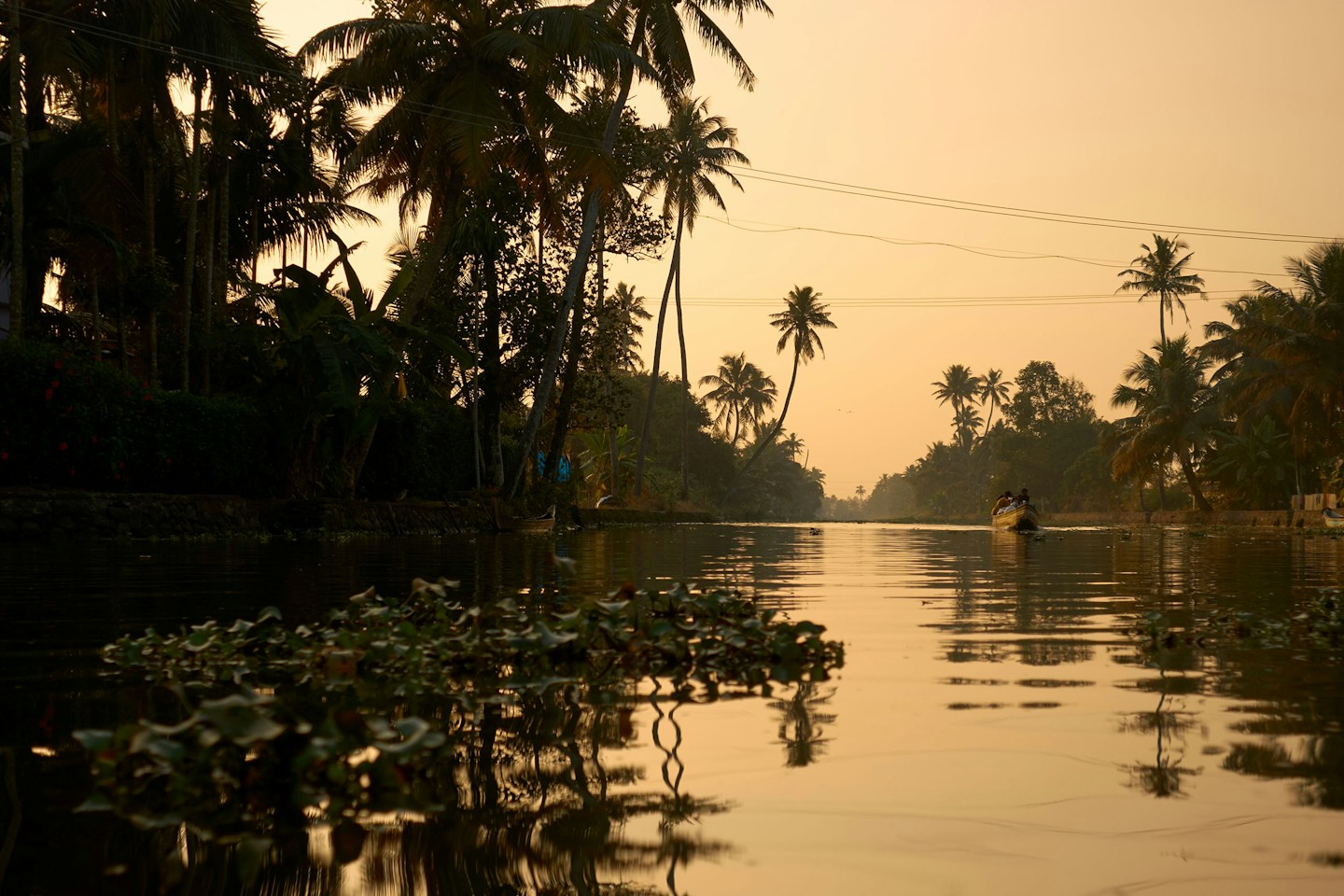
Alappuzha is closely associated with backwater travel, yet the name alone does not specify what a visitor will do. Before booking, decide whether the aim is an everyday passenger journey, a short private excursion or an overnight stay on a houseboat. Ask where the service starts and ends, what water it covers and how long the journey actually involves moving. A broad photograph of palms and water cannot answer any of those practical questions.
Use a reliable booking channel and confirm the operator responsible for the outing. Kerala Tourism provides houseboat information and points visitors toward organized local booking assistance, but each chosen vessel and arrangement still needs examination. Obtain clear written details of what is included. An itinerary that refers simply to a backwater cruise leaves too much unresolved, particularly when the activity is the main reason for staying in Alappuzha. Specificity makes it easier to compare offers and recognize whether the experience fits the group.
A public ferry belongs to its passengers
A local ferry follows a transport route rather than a personalized sightseeing plan. Check the current departure, destination, intermediate calls and return possibilities with the relevant operator. Do not infer a service from an old timetable or a travel video. If the intention is to disembark partway, establish how the onward or return journey works before leaving the main landing. A quiet stop can become inconvenient if the next useful boat has already departed.
On board, keep luggage compact and give boarding passengers room. Follow crew directions and avoid occupying access points while taking photographs. The pleasure lies partly in seeing how the water functions as a route for ordinary life. That experience depends on not obstructing the people using it for work, school, shopping or home. A public service can be visually rewarding, but it should not be judged as a disappointing excursion if it stops where passengers need to go rather than where a visitor wants a photograph.
A private trip should have a defined scale
For a shorter private outing, ask what kind of vessel is proposed and how its route fits the available time. Discuss boarding, seating, shade, safety equipment and what happens if weather prevents departure. Travelers with mobility needs should ask about the actual step between landing and boat rather than relying on a general description of comfort. Photographs of a spacious deck do not necessarily show the most demanding part of access.
A guided explanation can improve the trip if it connects visible features with documented local practices. Ask about the particular area instead of expecting a single account to describe all of Kerala's backwaters. Keep close photography of homes and people restrained, especially when a boat passes near a bank. Being afloat does not create permission to look into domestic spaces. A shorter, well-explained journey can provide more understanding than many hours spent seeking increasingly narrow passages without knowing whose water access is being used.
An overnight houseboat is accommodation as well as transport
Examine a houseboat booking with the same care as a room and an excursion combined. Ask about cabin layout, bathrooms, ventilation or cooling arrangements, meals and sleeping conditions. Establish when the boat moves, where it stops overnight and which parts of the experience are weather-dependent. Different travelers may imagine continuous movement, secluded mooring or a hotel-like room; none of these should be assumed without clarification.
Safety and environmental arrangements deserve concrete answers. Ask about lifejackets in suitable sizes, crew responsibilities, emergency communication and waste handling. A reassuring label should lead to an explanation of practice rather than replace it. Discuss food needs before boarding, including allergies and ingredients, because alternatives may be harder to arrange once underway. Make sure the group wants the overnight format. A land-based stay with a shorter boat outing may suit travelers who value more independent walking, dining or control over the evening.
The bank is inhabited space
Backwater scenery includes homes, gardens, workplaces and landing places, not just vegetation. The closeness of the view can make everyday activity unusually visible. Observe without turning laundry, bathing, commuting or household work into an unsolicited portrait. Ask permission where a close encounter allows it, and otherwise use restraint. A person looking toward a passing boat is not necessarily inviting a photograph.
On shore, use public paths and clearly arranged visits. Do not step into planted areas or private compounds simply because the scene appears welcoming. A local guide or community-led activity can explain particular forms of work and settlement while establishing appropriate access. Confirm what is included and how hosts are compensated. Respectful interpretation is more useful than a generic claim that a place is untouched or timeless. The people encountered are participating in present-day life, with the same interest in privacy and agency as visitors themselves.
Humidity and monsoon conditions alter the pace
Heat and humidity can make the interval between activities more important than the distance traveled. An early walk, a substantial shaded pause and a later outing may offer a better day than continuous movement. Choose accommodation that allows a real break without a difficult transfer. Carry appropriate water and clothing for the actual conditions, and seek current local advice when the weather is unsettled.
During heavy rain or other disruptive conditions, follow operator instructions and local guidance about water-based travel. A planned departure is not a guarantee that conditions remain suitable. Understand cancellation arrangements before booking and retain a land-based alternative that genuinely interests you. An urban museum, cultural visit or quiet meal can give the day a different subject. Avoid moving a long distance simply to preserve the word cruise on an itinerary when the broader purpose was an enjoyable encounter with the region.
Coast and hills belong to different transfer plans
A hill-region stay can complement the coast, but it changes the transport problem. Rail may connect some portions of the wider journey while the final approach requires road travel. Count that complete transfer before adding another base. A short trip may be more rewarding with Kochi and one backwater stay than with several additional landscapes connected by long travel days. The number of settings visited is a poor measure of how well they were experienced.
Leave the final period near the departure route rather than balancing an important onward journey on the last possible local connection. By then, a smaller itinerary can have produced distinct memories: an urban waterfront understood through trade, a public boat seen as transport and an Alappuzha outing chosen for clear reasons. Water and rail give those experiences a connecting rhythm. They work best when each leads to enough time in a place for the traveler to notice the life continuing around the route.
A few practical questions
Is an overnight houseboat essential to a Kerala visit?
No. Choose it when the accommodation and water journey appeal to the group. A shorter outing from a land-based stay can offer more flexibility, while a public ferry provides another experience with a transport purpose.
Can rail connect every intended destination?
Check each leg individually. The relevant station may still require a road or local water transfer to the chosen accommodation. Hill-region stays in particular need a complete approach plan rather than a railway ticket alone.
For current destination information, access guidance and local updates, visit the official Kerala travel resource. Check transport and attraction details directly before booking.
This is a general planning guide, not a live conditions report. Found something that needs updating? Send a correction.