Three Baltic capitals, without a daily packing routine
Tallinn, Riga and Vilnius make a natural cultural journey when each city gets more than an arrival evening. Compare current overland options and give the long connections their own space in the itinerary.
Inside this story
Tallinn, Riga and Vilnius can form a coherent overland journey without becoming three versions of the same old-town walk. Each capital has a different physical scale, architectural emphasis and national history. The strongest itinerary gives those differences enough time to emerge: a local collection, a neighborhood meal and a second walk beyond the first sightseeing circuit. The connections matter, but they should not occupy so many mornings that every city is experienced mainly through arrival and packing.
Plan the route from current transport information, then give each capital a substantial stay. An intercity bus and a rail connection may offer different practical advantages on the intended date. Neither should be chosen simply to preserve an imagined rule about how the journey ought to work. The useful sequence is the one that leaves time and energy for the cities themselves, with a realistic approach to the final departure.
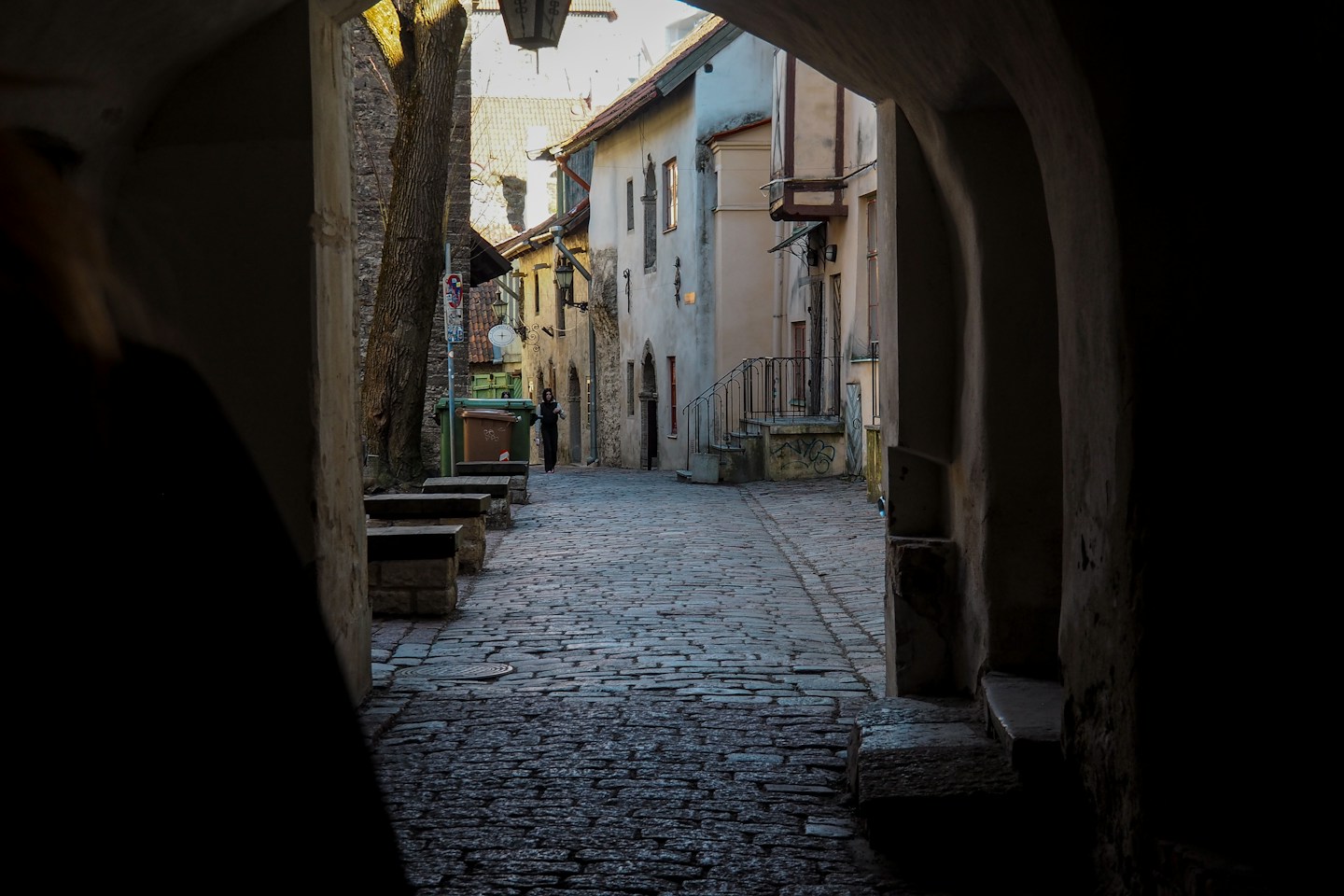
- Tallinn’s old town has slopes and paving that make luggage wheels less useful than expected.
- An intercity bus may be more practical than assuming a direct railway.
- A spare afternoon in each city makes room for weather changes and a second look at a favorite street.
Three capitals need three introductions
A guidebook category such as Baltic can be useful for organizing a journey, but it is not an explanation of every place encountered. Estonia, Latvia and Lithuania have distinct languages, institutions and historical experiences. Let each city introduce its own context rather than carrying the first museum's account unchanged into the next capital. Compare what you learn, but keep the distinctions visible. Similar dates or architectural features do not establish identical stories.
A practical way to do this is to choose one locally focused cultural institution in each city. Look for the scope of the collection and how its interpretation is framed. A museum of a particular period, an art institution and a general city museum answer different questions. Read introductions carefully and ask whose experiences are represented. The overland journey becomes intellectually richer when each stop adds a specific account instead of merely confirming a general impression of northern European streets and church towers.
Tallinn's old town has an upper and a lower geography
Tallinn offers an immediate historic setting, but its upper town at Toompea and lower town involve different walking and access decisions. The relationship between them is part of what makes the city interesting. Study a route that includes manageable approaches and pauses rather than repeatedly climbing for another view. Uneven paving can also make wheeled luggage less convenient than the distance from a station or stop suggests.
Give the first walk an orientation purpose: understand a few public streets, establish the return to accommodation and choose one interior visit. A viewpoint can then help relate the parts of the city rather than serve only as the first photograph. Respect residents and working buildings within the historic district, keeping entrances clear and avoiding intrusive photography. The appeal of an intact-looking streetscape should not lead to the assumption that every courtyard, stair or doorway is publicly accessible. A lived-in center remains more than its visitor route.
Tallinn beyond the first historic circuit
Allow a second period for a different neighborhood or cultural subject instead of repeating every landmark. Contemporary art, design or another collection can complicate the impression made by medieval walls and older buildings. Check the current programme and practical access of the institution chosen. A striking exterior may be worth seeing, but it does not establish that the visit inside offers the subject imagined from a photograph.
The same principle applies to neighborhood walking. Choose a public route and a clear reason to go, such as a collection, a food stop or a different relationship with the waterfront. Avoid treating any area as a guaranteed source of authentic life in contrast with the historic center. Both are parts of the present city, used in different ways. A thoughtful visit notices those uses without asking local people to demonstrate a particular version of their city for the traveler.
The transfer to Riga is a travel chapter
Compare current bus and rail options for the exact date, including the complete route, changes and booking conditions. Rail connections in the region have evolved, so older assumptions about either direct trains or the absence of useful links can mislead. Use operator information and identify who is responsible for each leg. If a connection is involved, understand the ticketing arrangement and the consequence of a delay before treating the route as one seamless service.
Whichever mode is chosen, give the arrival in Riga a modest role. Allow time to reach the room, eat and become oriented. A timed attraction immediately after a long intercity journey makes the whole day depend on the best case. Keep documents, food and water accessible during travel, and check luggage rules before boarding. The transfer can provide a welcome interval for reading or looking outward when it is not burdened with the expectation that another full sightseeing day must begin at the far end.
Riga's architecture extends beyond the old town
Riga rewards a walk that moves beyond the compact historic core toward its wider architectural streets. The city's Art Nouveau interest provides a useful subject, particularly in the area commonly described as the Quiet Centre. Choose a manageable route and look at buildings as complete compositions, not merely as a collection of decorative details above a doorway. A guide or institutional interpretation can explain what the eye first notices without requiring the visitor to invent a history from ornament.
Keep residential and commercial entrances clear while looking upward. A beautiful façade does not make the stairwell behind it public. Pair the architectural walk with one collection or a nearby meal, allowing enough time for the district to feel like part of the city. If the weather is poor, a relevant museum visit can give the exterior details more context for another day. Several nights in Riga make this exchange possible without forcing all architectural interest into the first dry interval after arrival.
Markets and meals can mark differences between cities
A market visit is most useful when it has a small purpose: buying food for the day, asking about an unfamiliar preparation or understanding how products are grouped. Check current trading arrangements for the particular place. Move aside before opening bags or studying a map, and ask before close photographs of people. The market is a place of exchange rather than a stage on which visitors are entitled to arrange the scene.
Use meals to learn a little rather than to prove comprehensive sampling. Ask about ingredients and portion sizes, especially when a translated name leaves uncertainty. Different preparations encountered in the three capitals can be remembered more clearly when each belongs to an actual meal and setting. Resist assigning a whole national cuisine to one restaurant experience. A welcoming explanation or a dish enjoyed carefully offers a valuable point of entry without becoming a claim that the traveler has discovered a definitive version of the country's food.
Vilnius should establish a different walking scale
Approach Vilnius with fresh attention rather than expecting the exact compactness or topography of Tallinn. Choose a city-center route that suits the accommodation and the subjects you want to explore, allowing room for churches, public spaces and neighborhood streets. An old-town visit can be substantial without requiring every historic interior. Check each site's visitor arrangements and leave enough time to understand the interpretation inside the places selected.
Užupis can provide another neighborhood perspective when included thoughtfully. Seek a clearly public cultural space or route rather than assuming that an artistic reputation makes private courtyards open to browsing. Look at the current activity and programme of any institution before setting out. The neighborhood should not become a novelty detached from the wider city. Pairing it with a locally focused collection elsewhere can help the visitor relate contemporary expression to a broader account of Vilnius instead of remembering only an appealing label.
Daylight and weather change the same route
The season affects much more than clothing. Short winter daylight can compress outdoor observation, while longer summer evenings offer room for a second walk after dinner. Plan museum time and intercity travel accordingly. A long connection made during daylight may provide views but remove the best walking period from a short stay; a later arrival may have its own costs in check-in and food. Compare the whole day rather than assuming one departure time is inherently preferable.
Wet paving, wind or icy conditions can make a historic walking circuit more demanding. Ask about current local conditions and choose footwear suited to the route. Keep an indoor subject available in each capital and use the flexibility of a multi-night base. Weather should not force all three cities into the same pattern of sheltering in the nearest attraction. With a little preparation, a changed afternoon can still advance the particular story the visitor is exploring in that place.
Fewer packing mornings create a better comparison
Allocate enough nights that each city has more than an arrival evening and departure morning. This leaves space for an initial orientation, a focused cultural day and another period shaped by what has become interesting. If the total time is too short, reduce the number of capitals rather than squeezing them all into rapid succession. A two-city journey experienced properly can provide a clearer understanding than three cities remembered mainly through bus windows and hotel corridors.
Protect the final departure with a sensible overnight location and realistic transport margin. Then use the remaining time for a second look rather than another distant excursion. A familiar street can show how much has changed in the traveler's understanding: Tallinn's levels become legible, Riga's façades connect with a museum account, and a Vilnius neighborhood acquires a place in the city. The route succeeds when each capital can be remembered distinctly. The overland connection gives them a shared sequence without dissolving their individual identities.
A few practical questions
Should buses be assumed to be the only practical connection?
No. Check current bus and rail services for the actual date. Timetables and links evolve, and the best option depends on changes, stations, booking conditions and the time you want to preserve in each city.
Is one night in each capital enough for this approach?
One night leaves little time beyond arrival and departure. Give each city multiple nights where possible, or choose fewer capitals so that cultural visits, meals and neighborhood walks can establish a distinct sense of place.
For current destination information, access guidance and local updates, visit the official Baltic capitals travel resource. Check transport and attraction details directly before booking.
This is a general planning guide, not a live conditions report. Found something that needs updating? Send a correction.