Tbilisi through courtyards, bakeries and hillside streets
Tbilisi’s compact-looking center contains steep streets, intimate courtyards and several different urban layers. Walk with time for bakeries and cultural stops, while treating private thresholds with care.
Inside this story
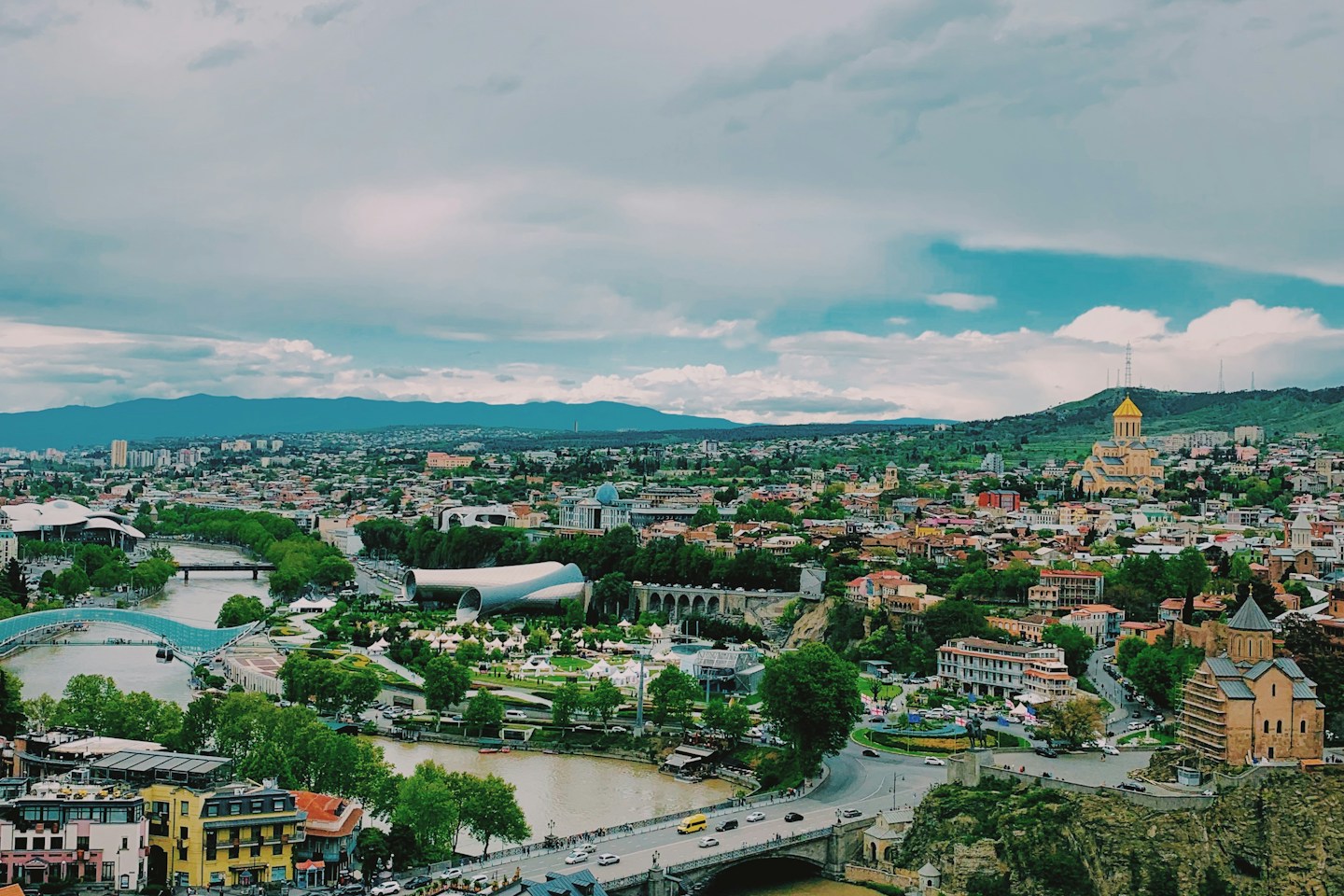
Tbilisi is easier to appreciate when its apparent compactness is treated cautiously. The Mtkvari provides an obvious line through the city, but streets rising away from it introduce uneven surfaces, sudden climbs and a very different walking scale. A balcony seen across a lane may belong to a home; a courtyard that looks inviting may be a shared domestic space. The city's intimacy is part of its character, and it asks visitors to look attentively without assuming access.
Food offers another way into the same urban texture. A bakery, a shared plate of filled dough and a restaurant explaining a regional preparation can make unfamiliar names tangible. Connect these encounters with a museum or contemporary cultural space, and Tbilisi begins to appear as a city of overlapping periods rather than a single picturesque old town. Leave enough time between them for the street itself to become part of the experience.
- The Mtkvari River is a useful geographic reference through the city.
- The sulfur-bath district has its own booking and etiquette considerations.
- A riverside or museum afternoon can replace a strenuous hill walk in bad weather.
Use the Mtkvari as a reference, not a complete route
A river map is useful for understanding which bank holds a destination and which bridge might connect it with the next stop. It does not establish that the whole waterfront makes a continuous, comfortable promenade. Roads, crossing points and changes of level affect the actual pedestrian route. Before setting out, identify the approach on foot rather than drawing a straight line beside the water. A route that briefly leaves the river may be far more pleasant than one chosen simply for its appearance on a screen.
Divide the center into walking areas that can stand on their own. One day might explore older lanes and the bath district, another the broader streets and cultural institutions farther along the urban corridor. This avoids repeatedly crossing bridges to retrieve an attraction overlooked on the other side. The river then becomes a way to relate districts, not an instruction to cover an arbitrary distance. It also offers an orientation point when a winding lane has made the map feel less legible.
Courtyards have an inside and an outside
Tbilisi's balconies and shared courtyards are among its most compelling visual features, but architectural interest does not turn a residential threshold into a public entrance. A door left open for ventilation or deliveries is not an invitation. Enjoy the view from the public lane, seek clearly welcoming businesses or join a visit with explicit permission. If someone invites you in, clarify where photography is acceptable and avoid including residents or household possessions without consent.
This boundary can improve the quality of observation. From outside, notice how balconies meet the street, how buildings adapt to a slope and how materials vary along a single block. These details raise questions about repair, occupation and change without demanding a private tour. A local guide can explain what is documented and what is uncertain. Resist easy stories in which every irregularity becomes evidence of timeless charm; buildings are also places where people manage maintenance, comfort and daily life.
Bread as an everyday encounter
A bakery is a useful first food stop because it gives the visit a concrete purpose. Look at what is ready, ask for a manageable quantity and find out whether it is best eaten immediately. Where a baking process is visible, observe without obstructing the entrance or leaning into a working area. The appeal lies in understanding a food through its ordinary sale and use, not in securing a performance for the camera.
Bread also changes the way a day can be organized. A small purchase can support a modest breakfast or a pause between neighborhoods rather than requiring another formal restaurant stop. Think about how it will be carried and eaten; a hot or delicate item may deserve attention now, while another can wait. If you want to learn about technique or ingredients, choose a quiet moment and a clear question. A brief exchange understood properly often provides more than an extended conversation conducted while the queue grows behind you.
Look specifically for shoti, often called shotis puri: a long, pointed bread baked against the hot walls of a tone oven. Its shape and browned surface give the bakery visit a concrete subject. At a restaurant, distinguish khinkali, pleated dumplings that can enclose broth and a meat filling, from khachapuri, a family of cheese breads with regional forms. A round Imeretian version and an open, boat-shaped Adjarian version are different orders. Ask which preparation is offered, and how much the kitchen recommends, rather than treating the names as interchangeable snacks.
Filled dough deserves specific questions
Familiarity with the broad idea of dumplings or cheese bread does not mean that every Georgian preparation will be interchangeable. Fillings, dough, serving size and the way a dish is eaten all matter. Ask the server to explain what distinguishes the options rather than ordering several on the assumption that they are small tasting portions. A table can become crowded quickly when substantial dishes are treated as side orders.
Sharing can be enjoyable when it is discussed rather than assumed. Establish how many dishes the server recommends for the group, whether items arrive together and what can comfortably be added later. Travelers with dietary needs should ask about fillings, butter, stocks and finishing ingredients instead of inferring suitability from a short translation. The aim is to taste with enough appetite and attention to understand differences. A meal of fewer well-chosen dishes can be more revealing than a table that leaves everyone trying to finish unfamiliar food out of politeness.
The bath district as a place with its own terms
The sulfur-bath district is visually distinctive, but a bathing session needs a separate decision from a neighborhood walk. Establish whether the arrangement is private or shared, what facilities are included and what clothing or equipment is expected. Ask about booking, duration and any additional services before paying. People differ in their comfort with heat and bathing customs, so a companion's enthusiasm should not be treated as a decision for the whole group.
Anyone with a health condition affected by heat should seek appropriate professional advice rather than relying on a travel description. A visitor who chooses not to bathe can still explore the district's public streets and architecture. Keep a bath appointment away from a rushed transfer or an ambitious hill walk, since the point is unlikely to be served by hurrying directly back into exertion. As elsewhere in the old center, look carefully at footing and respect private entrances around the public route.
The hillside begins before the viewpoint
A viewpoint itinerary often emphasizes the ascent and the photograph, but the descent deserves equal attention. A lift or vehicle may solve one direction without establishing a suitable route down. Check the precise connections and choose footwear for the ground actually involved. Uneven paving, steep steps and wet surfaces can be demanding after a long day even when the overall distance appears short. A hill is not automatically a gentle urban stroll because buildings surround it.
Decide what you want from the elevated outing. If the purpose is orientation, a clear view and a short pause may be enough. If the interest is a longer walk, consider the weather, remaining daylight and the ability of the least confident person. Agree on a return route before splitting up for photographs. Leave the next meal close to the endpoint or easy to reach, so that the outing ends with a workable evening rather than another navigation problem on tired legs.
Look for the city beyond the old-town image
A contemporary gallery, cultural venue or exhibition can challenge the impression created by a morning among balconies and older lanes. Choose a place whose current programme interests you, and check what is actually on view. A building celebrated in travel photographs may function differently from the cultural institution imagined from its exterior. The useful visit is the one that offers content as well as a setting.
Contemporary spaces also help keep historical interpretation honest. Tbilisi's urban fabric reflects multiple periods, and a single visual label cannot explain every street. Ask how a particular building was used, when it changed and whose account is being presented. Distinguishing these questions prevents a pleasant walk from collapsing into an undifferentiated story of old and new. The city becomes more interesting when different forms of evidence remain visible, including the ways present-day artists and residents interpret the inherited environment.
Bad weather can change the subject of the day
When rain makes hillside streets uncomfortable, a museum or a more level district can become the main outing rather than an inferior substitute. Avoid moving repeatedly between scattered indoor stops just to preserve the original list. Choose one substantial subject, find a nearby meal and allow the day to become coherent on its new terms. A short outdoor interval may then be enough to connect the visit with the surrounding streets.
Heat can demand a similar adjustment. An early walk, a slower lunch and an indoor afternoon may reveal more than a continuous route through exposed streets. Carry water and choose places to sit before the group becomes exhausted. These decisions are particularly helpful in a city where the final few lanes to accommodation may rise more steeply than expected. A well-positioned base provides the option of a genuine break, making a later neighborhood walk feel voluntary rather than the last obligation in a long schedule.
Build understanding through a second encounter
A return to the same bakery or lane can make Tbilisi feel more legible. The first visit is often occupied by pronunciation, payment and navigation; the second leaves attention for details. Perhaps a preparation becomes recognizable or a balcony's relation to the slope becomes clear. Repetition works best when it answers a question that arose earlier, not when it is used merely to reproduce a photograph in different light.
Leave an uncommitted period near the end of the stay for this purpose. It may lead to a longer museum visit, another meal at a place that explained its food well or a public walk connecting two districts now understood separately. What matters is that the city begins to have relationships. Courtyards, bakeries, hills and contemporary rooms then become parts of a lived urban setting rather than disconnected symbols of atmosphere. That is a more durable memory than the impression of having found every attractive door.
A few practical questions
Is the old center suitable for an entirely flat walking holiday?
Do not assume that it is. Check specific street approaches and accommodation entrances, and use transport to reduce demanding changes of level. Museums and selected public routes can support a rewarding visit with fewer steep sections.
Should a first food order include many different dishes?
Ask about portions and sharing before ordering. Begin with a few distinct preparations and add food if necessary. This helps the group understand flavors and serving customs without losing appetite or creating avoidable waste.
For current destination information, access guidance and local updates, visit the official Tbilisi travel resource. Check transport and attraction details directly before booking.
This is a general planning guide, not a live conditions report. Found something that needs updating? Send a correction.