Bologna through its markets and porticoes
Bologna’s porticoes make a fine framework for a food-centered city break. Plan around a few market streets and cultural stops, then let lunch have the time it deserves.
Inside this story
Bologna makes a food-centered visit more interesting by refusing to keep food separate from the rest of the city. Market streets open into civic spaces; porticoes connect shops, homes and university life; a long lunch changes the pace of the afternoon. The best starting point is therefore a walk with one meal at its center, rather than an attempt to taste continuously from breakfast until bedtime. Give a few cultural interiors equal attention and reserve the sustained uphill walk toward San Luca for a day when it fits. Bologna's reputation becomes more specific when its food is encountered in the same streets and daily routines that help sustain it.
- Porticoes link much of the central walking experience and provide useful shelter.
- The university district adds a different rhythm from the central shopping streets.
- An apartment kitchen is useful only if the itinerary actually leaves time to shop and cook.
Learn the city beneath the porticoes
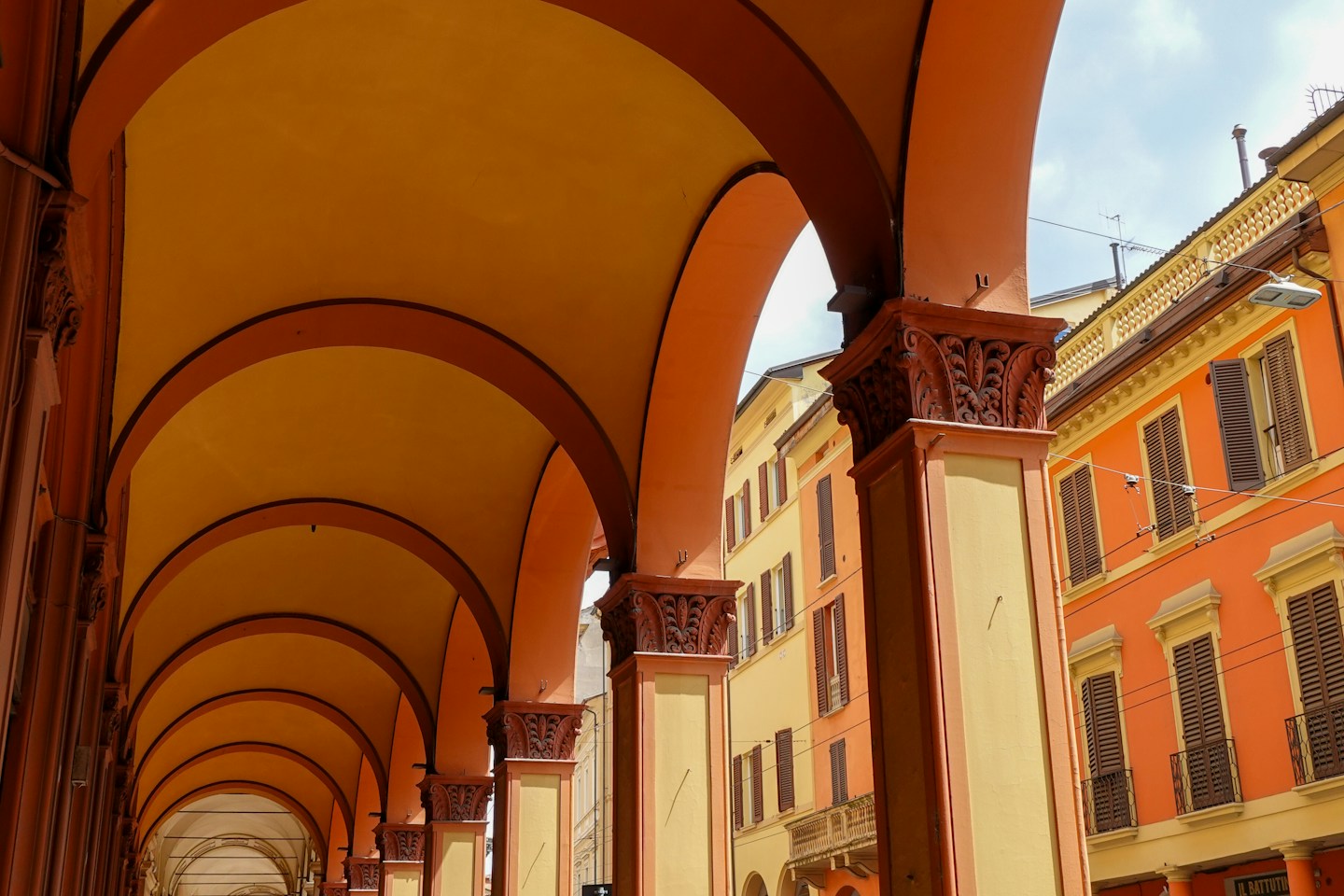
The porticoes provide shelter and continuity, but they are more than convenient cover. Bologna Welcome describes them as spaces originally under private ownership yet used by the community, a relationship that helps explain their social character. Their World Heritage recognition concerns a selection of stretches rather than a requirement to follow one enormous circuit. Read the city's introduction for context: bolognawelcome.com.
Begin with a manageable route connecting the accommodation to the central area, then notice changes in scale, materials and use. Some passages frame shops; others feel more residential or institutional. Keep entrances clear and leave room for people moving purposefully through the city. Shelter does not remove crossings, uneven surfaces or every exposure to weather, so examine the actual route if accessibility is important. A short walk repeated at different times can reveal deliveries, university movement and the shift toward evening dining. The porticoes are most rewarding when understood as working urban space. Their beauty comes partly from the way they allow many kinds of life to share the same continuous edge.
Enter the Quadrilatero with an appetite and a purpose
The Quadrilatero's compact market streets can support a whole morning, but density should not become an excuse to block narrow passages. Move aside to look at a display, ask before close photographs of people and let shoppers complete ordinary transactions. Decide whether you are buying food, learning about ingredients or seeking a meal. Each is a legitimate interest, but making the purpose clear helps avoid hovering indecisively at a busy counter.
Ask what is prepared there and how a product is normally used. A short answer about an unfamiliar shape of pasta or a particular ingredient can be more informative than ordering only the name you already recognize. Do not expect every business to provide a demonstration at a moment's notice. If shopping for an apartment meal, think through storage, utensils and the time available to cook before buying enthusiastically. Food is not improved by spending the rest of the day warm in a bag. A considered purchase and an unhurried meal create a more grounded market experience than collecting small tastes solely to increase the number of things tried.
Make one pasta meal a real meal
Start with the distinction between tagliatelle al ragù and tortellini. The former pairs egg-pasta ribbons with a meat sauce; the latter consists of small filled parcels whose filling traditionally brings together ingredients such as pork, mortadella, prosciutto and Parmigiano Reggiano. Lasagne verdi introduce another relationship between pasta, spinach and ragù, while gramigna alla salsiccia uses a short curled shape with sausage sauce. These are useful points of orientation rather than a demand to order four pasta courses. Bologna Welcome explains the preparations at bolognawelcome.com. Knowing the basic differences makes a menu more legible and helps you choose a meal that fits both appetite and interest.
Fresh pasta traditions deserve attention without turning a restaurant visit into an examination. Ask how the kitchen prepares a dish and what portion or course structure makes sense for your appetite. The same familiar term can conceal differences in filling, sauce or serving style. Travelers with allergies or dietary requirements should explain them directly and confirm understanding, particularly where pasta, broths or sauces contain several ingredients.
Leave time to sit and eat. A substantial lunch need not be followed immediately by another food stop, and a tasting agenda can become self-defeating when everything starts to feel like an obligation. Pair the meal with a short walk or one nearby collection rather than a difficult cross-city commitment. Restaurant schedules and reservations should be checked directly when a particular kitchen matters to the trip. At the same time, avoid making the entire visit depend on obtaining one famous table. Bologna's culinary identity is encountered through many businesses and preparations, not through a single correct order. An attentive conversation and a comfortable pace often produce a more useful understanding than trying to prove that every canonical dish has been consumed.
Let the university quarter alter the rhythm
The university district provides a different perspective from central shopping streets. Walk with enough time to notice how cafés, institutional buildings and ordinary movement share the area. Students and people working in the city are not background characters in an architectural visit; their use of the streets is part of what makes the district distinct. Keep a respectful distance around study spaces and do not enter buildings unless access is clearly authorized.
Choose an appropriate cultural interior or exhibition if one matches your interests, checking current visitor arrangements in advance. A collection can help explain a subject that the street alone only hints at. Follow it with a simple meal or drink close by rather than immediately crossing back to the busiest market area. This change in daily scale keeps the visit from becoming one uninterrupted food tour. It also challenges a narrow image of Bologna as a repository of old culinary traditions. The university setting brings ongoing learning, debate and contemporary urban life into the picture, all of which belong beside the porticoes and historic fabric rather than outside them.
Give a church or civic collection enough quiet
Cultural stops offer balance, but only if they are selected with more interest than a need to fill the gap before dinner. Choose a church, civic collection or museum whose subject appeals and allow enough time to read and look. Check present access directly, including any rules around worship, bags and photography. A religious interior may not be available when you first pass, and the appropriate response is to adjust the route rather than treat worship as an obstruction.
One carefully visited place can change how you understand the streets outside. Materials, imagery, patronage or civic stories may become recognizable elsewhere during the stay. Resist placing several collections in succession simply because their entrances are close. Attention has limits, especially after a large lunch or a long morning on foot. A shorter day with a meaningful interior and a relaxed meal can be more satisfying than a dense cultural sequence in which the final rooms become indistinguishable. The purpose is to connect food with the city around it, not to compensate for eating by accumulating a separate quota of history.
Set San Luca apart from the market day
The approach toward San Luca involves a sustained uphill walk. Although porticoes are part of the experience, covered space should not be confused with effortless terrain. Assess the distance, gradient, conditions and return arrangements before starting. Choose footwear and water for the actual walk and allow enough time for pauses. Somebody comfortable with short central strolls may experience the ascent differently, especially in heat.
If the group has different abilities, discuss alternatives before the day rather than assuming everyone will manage once underway. The sanctuary is a place of worship, and visitor behavior should follow current guidance. Bologna Welcome provides the setting and official orientation: bolognawelcome.com. A long uphill outing does not need another ambitious walking circuit afterward. Give lunch and the return their own margin. Equally, there is no obligation to undertake the walk to complete a city break. The central porticoes, collections and food streets can support a full visit. San Luca is most rewarding when chosen for its particular experience, not added because a city list appears unfinished without it.
Decide whether the kitchen will actually be used
An apartment kitchen can open a different relationship with the markets, but only if the itinerary leaves time for shopping, preparation and cleanup. If every lunch and dinner is already planned outside, a kitchen may be less useful than a conveniently located room. Think about what you would realistically cook and whether the accommodation provides the necessary equipment and storage. A simple meal can be enough; there is no need to stage an elaborate reconstruction of restaurant food.
Shopping becomes more enjoyable when quantities fit the stay. Ask for manageable amounts, understand how purchases should be stored and avoid treating perishables as souvenirs to be carried through several further travel days. If bringing food home, verify the rules relevant to the destination and transport before buying. Within Bologna, a home meal can create a quieter evening after San Luca or a museum day. It also gives market conversations a practical purpose. The benefit is not necessarily saving time or money, but learning how individual ingredients fit together when you take responsibility for a modest meal rather than simply order the finished result.
End with a familiar route and a lighter schedule
Keep the last day close to the base and the onward connection. A final market purchase, one favorite porticoed stretch and an unhurried meal can bring the visit together without requiring another major attraction. Leave room for collecting bags and reaching the actual platform or departure point. Central-looking accommodation can still involve a walk with luggage, so include it in the plan.
Use bolognawelcome.com for official destination information and confirm specific collections and restaurant arrangements directly. The useful memory of Bologna is a set of relationships: food shops and narrow streets, covered passages and shared urban life, the university quarter and its changing rhythm. A visit organized around those relationships remains satisfying even if several famous dishes or landmarks are left unexplored. It allows meals to be enjoyed rather than performed, cultural places to receive proper attention and ordinary walking to become part of understanding the city. That is what makes a short break feel substantial without making every hour full.
A few practical questions
Does a food-focused Bologna visit need continuous tasting?
No. A few deliberate meals with time between them usually allow greater attention and appetite. Markets, university streets and cultural interiors provide valuable context.
Is the San Luca walk similar to central strolling?
It involves sustained ascent and needs separate planning for ability, conditions and return. Porticoes provide cover but do not remove the physical effort.
For current destination information, access guidance and local updates, visit the official Bologna travel resource. Check transport and attraction details directly before booking.
This is a general planning guide, not a live conditions report. Found something that needs updating? Send a correction.