Lyon between the market and the museum
Lyon’s food reputation is a starting point, not the whole itinerary. Connect a market morning with the city’s rivers, hillside neighborhoods and cultural collections to give meals a sense of place.
Inside this story
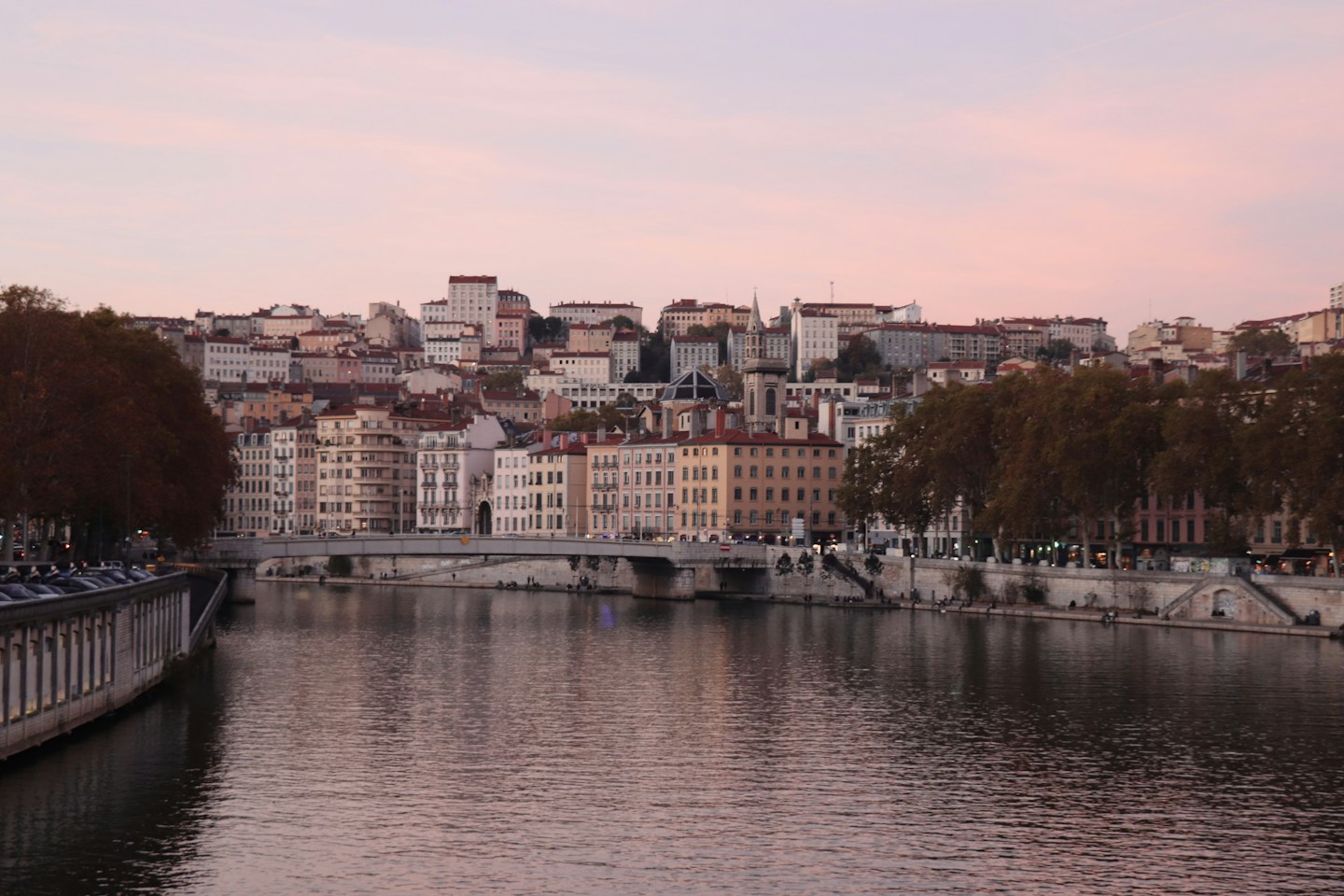
Lyon is often introduced through its tables, but a meal becomes more interesting when it belongs to a recognizable city. The Rhône and the Saône establish the first outline: two river corridors, a peninsula between them and hills that change both the views and the effort of walking. Markets and restaurants fit within this structure alongside former working districts, museums and residential streets. They are connected parts of the visit rather than competing distractions.
Give Lyon enough time for one morning shaped by food and another by a collection or neighborhood. A substantial lunch can sit between a market walk and an easy riverbank afternoon. A hillside outing works better when it has room for stairs, observation and a pause. The result is a city stay in which appetite and curiosity support each other instead of requiring a succession of increasingly elaborate bookings.
- The Rhône and Saône help explain the city’s layout.
- Food markets have trading hours that should shape the morning plan.
- A central accommodation base can reduce daily travel between the two river corridors.
Two rivers, three different walking rhythms
The Saône side and the Rhône side should not be treated as interchangeable scenery. Each offers a different relationship to surrounding streets, bridges and open space. The peninsula provides a useful orientation framework, while Vieux Lyon lies across the Saône beneath the western slopes. Begin with a map that shows crossings as well as districts. A bridge that makes sense during a relaxed morning may add an unnecessary loop after a long museum visit.
A riverside walk is particularly useful after lunch because it removes the pressure to keep entering places. Let the route be a modest stretch with a clear return rather than a compulsory march from one end of the city to the other. Weather, shade and seating matter more than an arbitrary distance. When choosing accommodation, compare the actual street with both rivers and the transport stops you expect to use. A general description such as central conceals meaningful differences in daily convenience.
Market shopping as a lesson in season and language
A market morning depends on trading activity, so check the particular market's days and hours before designing the rest of the day. Arriving after the stalls have begun packing is a different experience from observing a busy food-shopping period. Go with a small purchasing purpose: fruit for later, something for a simple lunch or an ingredient whose name you want to understand. This provides a reason to examine produce carefully without hovering indefinitely at a busy counter.
Look at how products are labeled and grouped. A cheese display invites questions about texture and maturity; a prepared-food stall raises different questions about reheating and storage. Tell the seller when you plan to eat the purchase, particularly if you lack refrigeration. Buying for an immediate picnic is not the same as buying for a train journey tomorrow. Keep the exchange proportionate to the queue, and move to a suitable public space before unpacking bags or comparing your discoveries.
Understanding a bouchon before reserving
A traditional Lyon restaurant can be an excellent introduction to dishes that are unfamiliar even to travelers comfortable with French menus. Its appeal often lies in a particular repertoire and style of hospitality, so read an actual menu before booking. Offal, rich preparations and meat-based components may appear where a translated dish name gives little warning. Curiosity is useful, but nobody needs to agree to a meal that conflicts with their preferences in order to be a serious visitor.
Ask direct questions about ingredients and portion style, especially when considering a set menu. Dietary needs are easier to accommodate when discussed before service rather than after food arrives. A restaurant whose strengths match your appetite is a better choice than a famous address chosen only for reputation. Give that meal its own time, then avoid following it with a tightly scheduled uphill tour. The city offers ample ways to spend an afternoon that do not require either another course or immediate athletic determination.
Vieux Lyon through doors and courtyards
Vieux Lyon rewards close looking at building fronts, changes in paving and the relationships between lanes and courtyards. Its historic character should be approached through public access rather than a search for unlocked doors. Some passages known as traboules have visitor arrangements, while others are private or restricted. Follow the current signs and any stated hours. An online route describing a passage as visitable does not override a closed door or a resident's request.
The interest of a passage is not merely that it provides a shortcut. It can reveal how buildings meet, how circulation works within a dense block and how apparently separate streets relate. A knowledgeable guide or official interpretation can help distinguish documented history from attractive anecdote. If joining a group, keep voices down in enclosed spaces and avoid blocking entrances. The pleasure of discovering an interior route depends on remembering that the place may remain a working address for people who did not choose to become part of the tour.
Croix-Rousse and the city of work
The Croix-Rousse slopes introduce a different urban story from monumental squares and riverside façades. Lyon's silk-working history gives this area a useful interpretive thread, but the neighborhood is also lived in now. Rather than treating every stairway as a route to a view, look for opportunities to connect buildings and street scale with a museum, workshop visit or guided explanation. Check the scope of any specialist visit so that it answers the questions that actually interest you.
Climbing and interpretation compete for attention when the route is too ambitious. Choose a manageable section, identify the easiest return and leave room to stop without occupying a stair landing. Visitors who find stairs difficult can still explore the subject through collections and accessible public streets. A neighborhood's history does not reside only in its most strenuous path. Pairing one thoughtful cultural visit with a shorter walk often provides a clearer understanding than crossing the entire hillside while watching the clock and the next set of steps.
Choose a museum by the question it can answer
Lyon's museums need not be approached as a ranked list. Art, urban history, industry and other subjects lead to quite different afternoons. Start with the question left by the morning: perhaps how textiles were made, how the city expanded or how a particular period represented itself. Then choose a collection that offers a useful response. A focused visit to selected rooms can be more satisfying than a complete circuit undertaken out of duty.
Check opening days, temporary displays and the physical layout before committing to a visit. A major building may require substantial walking even when the weather outside is poor. Give companions permission to spend time differently within the same institution, agreeing on a meeting point and a realistic finish. A museum works best as a place of attention. It should not become the emergency container into which every remaining attraction is compressed simply because rain has removed an outdoor option.
A lunch can define the afternoon without consuming it
A memorable lunch creates an opportunity to simplify what follows. Place it near the end of a morning route, then keep the afternoon either close by or straightforward to reach. This arrangement allows the meal to feel generous without turning a subsequent reservation into a countdown. If the group prefers a lighter lunch, make that choice deliberately and reserve more appetite for the evening. There is no obligation to reproduce an imagined local ideal at every sitting.
The useful distinction is between giving food time and organizing the whole city around meals. Bakeries, markets and small shops already make eating part of an ordinary walk. A carefully chosen restaurant adds another register. Together they can reveal differences in setting, portion and formality without requiring exhaustive sampling. Notice what you actually enjoyed and why: the preparation, the ingredients, the conversation or the room. Those distinctions help you choose the next meal more intelligently than simply searching for another celebrated address.
Build the second day around a different level
If the first day stays largely between the river corridors, give the next day a hillside or neighborhood focus. If the first day involves steps and historic passages, allow the next morning a simpler surface and a collection with seats. This change in physical rhythm makes the city feel larger without forcing distant excursions. It also helps companions with different stamina share the same visit, because the demanding sections are balanced rather than repeated.
A return to a familiar riverbank has value after the surrounding geography becomes clearer. A bridge crossed only as transport on arrival can become a useful place to understand the hill explored later. The two rivers then serve as an organizing memory rather than a pair of postcard settings. Leave enough time for that recognition. A final afternoon spent revisiting one stretch thoughtfully may offer more than a hurried departure for another district whose name will be remembered more readily than its character.
What to carry away from a food city
Food souvenirs require practical judgment. Ask about storage and travel suitability before buying something delicate, and check destination import rules where relevant. A product chosen because you understand how it will be used has a better future than an impressive parcel that cannot survive the journey. Recipes, notes on unfamiliar preparations and the name of a cheese you particularly liked can also extend the visit after the bag is unpacked.
The most useful souvenir may be a changed way of reading a menu or a market. Lyon makes the relationship between craft, daily commerce and hospitality unusually visible when these are allowed to connect. A morning purchase, a hillside account of work and a meal prepared with a recognizable tradition can illuminate one another. The city deserves that wider frame. Its reputation for food becomes richer when a visitor can remember the rivers, neighborhoods and people around the table as clearly as the dishes themselves.
A few practical questions
Does every meal need a reservation?
Plan ahead for a restaurant that is central to your visit, especially when discussing dietary needs or a particular menu. Leave other meals flexible enough to fit the neighborhood you are actually exploring and the appetite you have that day.
Can Lyon be enjoyed without strenuous hillside walks?
Yes. The river corridors, selected museums and central streets provide plenty of substance. Check individual access arrangements and transport links, and approach silk history through interpretation rather than assuming that every important subject requires climbing the slopes.
For current destination information, access guidance and local updates, visit the official Lyon travel resource. Check transport and attraction details directly before booking.
This is a general planning guide, not a live conditions report. Found something that needs updating? Send a correction.