Lima’s coastal neighborhoods and the long lunch
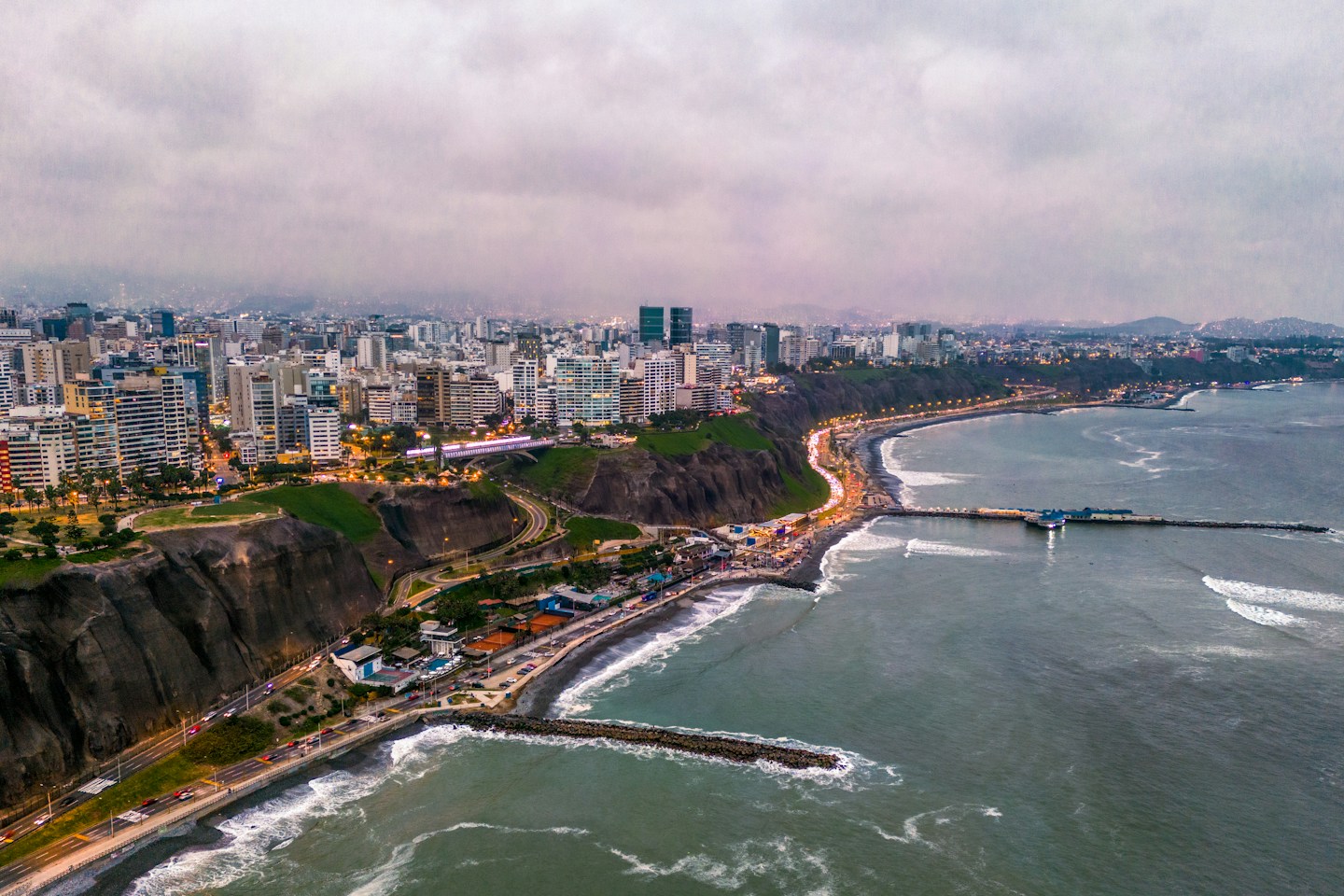
Lima’s coastline provides a useful frame for a food and culture visit. Combine a neighborhood walk with a museum or historic-center outing, while allowing generous time for cross-city travel.
Inside this story
Lima's Pacific edge offers a useful beginning, but it explains only part of the city. Clifftop paths, coastal neighborhoods, a major museum and the historic center belong to different geographic and cultural settings. A visit becomes more satisfying when those differences shape the itinerary. Use the coast for orientation and everyday walking, then give a more distant cultural outing its own substantial block of time.
Food can provide continuity between these settings without becoming the only subject. Lima's reputation encourages ambitious restaurant lists, yet a long lunch needs room around it. Put it near the day's main neighborhood rather than between two difficult transfers. The meal then becomes part of a coherent visit, with enough attention left for ingredients, conversation and the surrounding city.
- Miraflores offers clifftop walking areas above the Pacific.
- Sea mist can change the appearance and temperature of a coastal day.
- An arrival day can work best as a short neighborhood walk and an early meal.
The clifftop is a level, not the shoreline
In Miraflores, coastal walking often happens high above the water. The distinction is important: seeing the beach below does not mean reaching it requires only a few easy steps. Identify actual access routes and the climb back before deciding on a waterfront outing. Visitors with limited endurance or mobility should examine the particular path rather than assuming that a seaside setting guarantees an accessible beach approach.
The clifftop itself can support a rewarding walk. Choose a manageable public stretch, allow for wind and look for a comfortable place to pause. Sea mist may soften views and make the day feel cooler than expected, so carry a layer suited to conditions. There is no need to regard a muted horizon as a spoiled coastal experience. The changing visibility can draw attention back to the nearby landscape and the relationship between the dense city, its planted edges and the ocean below.
Miraflores as an arrival neighborhood
After a long arrival, a short neighborhood circuit can be more useful than an immediate major excursion. Learn the route from accommodation to a nearby meal, identify a place to obtain water or essentials and establish how the district meets the coastal paths. This modest first outing provides a practical foundation for subsequent days. It also helps travelers assess their energy without committing to a distant reservation before they understand local travel conditions.
Accommodation should be judged by its exact position, not only the neighborhood name. Compare the entrance with the streets and stops you expect to use, and ask about noise or internal steps if these matter. A room convenient for a restaurant cluster may relate differently to the coast than a map label suggests. Consider the departure as well as arrival. A useful base makes ordinary evenings simple enough that not every meal becomes another exercise in transport planning.
Barranco deserves its own afternoon
Barranco can offer a different rhythm through cultural spaces, neighborhood streets and coastal outlooks. Select a few places that actually interest you rather than treating the district as a collection of walls to photograph. A current exhibition can give a walk intellectual substance, while nearby streets show how institutions sit within a residential and commercial neighborhood. Check what is open and what is on display before crossing the city for a particular venue.
Allow time between interior visits to notice the district without intruding on private property. A striking doorway or courtyard may belong to a home or business with specific access conditions. Ask before close photographs of people and keep pedestrian space clear while looking at art or architecture. End with a meal nearby if that suits the group's appetite. Staying in the same general area allows Barranco to establish its own character instead of becoming a brief stop fitted between more distant commitments.
The historic center is a separate geographic project
Treat a historic-center day as a substantial outing from the coastal districts. Travel time can be difficult to predict, and the first site should not be booked on the assumption of an unusually smooth journey. Choose a coherent area, check current access instructions and establish where the visit will begin and end. If using a guide, agree on the historical focus as well as the meeting point.
Inside the center, public squares, religious buildings and civic architecture raise different questions from the coastal neighborhoods. Give one or two interiors proper attention rather than trying to collect every notable façade. Available interpretation can help distinguish periods and institutions that otherwise become a general impression of monumental scale. Keep the return transport in mind before the group is exhausted. A thoughtful morning and a straightforward lunch may provide a more memorable encounter than staying until the final available hour and then negotiating the transfer while tired.
A museum can anchor a wider journey through Peru
For travelers continuing elsewhere in the country, a Lima museum can offer context before archaeological places or regional traditions are encountered on the road. Choose a collection by its scope, and read how it organizes objects across time and geography. Peru's cultural history should not be compressed into a single civilization or a vague prehistory. A careful visit gives names, materials and chronological relationships a clearer place in the traveler's understanding.
Avoid trying to see a large collection at the pace of a short guided summary. Select a few themes, compare objects and use the labels to test first impressions. Questions about provenance, purpose and interpretation are often as interesting as questions about age. If companions have different interests, agree on a meeting point and allow some independent time. A museum offers the greatest value when the visitor is able to think, not merely to prove that every room was crossed before lunch.
Seafood is a starting point for questions
Well-known seafood preparations may be the first dishes a visitor associates with Lima, but names do not establish every ingredient or preparation method. Ask how a dish is made and whether it suits your preferences. Travelers who avoid raw or lightly prepared foods should say so explicitly and choose alternatives that meet their needs. Allergies require a direct conversation about ingredients and preparation, including sauces, garnishes and shared equipment where relevant.
A restaurant's reputation cannot replace that conversation. Choose a place where questions can be answered clearly, and do not let the pressure to order a celebrated dish override a genuine restriction. The meal can remain an exploration through cooked seafood, vegetable preparations or other parts of the menu. Understanding the choice in front of you is more valuable than treating a famous preparation as a compulsory travel achievement. Appetite, comfort and informed curiosity should govern the order.
Look beyond one national signature
Peruvian food traditions are broader than a single coastal dish. A menu may lead toward ingredients and techniques associated with different regions and communities. Rather than claiming to sample the entire country in one sitting, use a particular dish to ask where its ingredients or preparation belong. A good explanation can make a later journey more interesting by giving an unfamiliar name a sensory reference.
Contrast can be simple: one carefully chosen restaurant meal, a bakery visit and a market-oriented outing can reveal different forms of everyday eating. Check the practical arrangements of any food tour, including how much food is provided and whether dietary needs can be met. Continuous tasting can blur distinctions and waste appetite. Leave pauses to register flavor and texture, and let the surrounding streets remain part of the experience. Food is most useful as an entry into the city when it points outward toward people and places rather than inward toward an ever-longer checklist.
The long lunch needs a nearby afterwards
A substantial lunch is easiest to enjoy when the next commitment is flexible. Pair it with a modest walk, a local exhibition or a return to the room, depending on energy and weather. Do not build an expensive timed reservation on the assumption that a leisurely meal will end at an exact minute. The freedom to ask another question or linger over a final course is part of what makes the occasion worthwhile.
If the group prefers an early or light meal, organize the day accordingly rather than following an imagined rule about how travelers should eat in Lima. Different appetites can coexist through shared dishes or a menu with varied options, provided the arrangement is understood. Discuss portion sizes before ordering and keep an eye on what has already been chosen. The most memorable meal is often the one that leaves enough comfort to enjoy the conversation and the rest of the day.
Plan around transfers, then recover the small scale
Traffic should influence the number of cross-city journeys, not make the whole visit feel like a transport problem. Cluster activities into districts and reserve generous travel margins for the few distant outings that matter. Keep the exact destination address and return plan available, especially when visiting an institution away from the accommodation neighborhood. On a transfer day, reduce the number of additional tasks rather than expecting every saved minute to become another attraction.
Within each district, recover the human scale through a short repeat walk or an ordinary meal. A familiar coastal section can feel different after learning more about the city's history; an ingredient seen in a museum context may later appear on a menu. These connections distinguish a visit from a series of reservations. Lima becomes more intelligible when its ocean edge, historic institutions and varied food life are allowed to relate, with enough room between them for the traveler to notice how one changes the understanding of another.
A few practical questions
Can the coast and historic center be combined in one busy day?
They can be visited on the same date, but the transfer can consume substantial time. For a first visit, give the historic center its own main outing and keep any later coastal walk short, nearby and optional.
Does coastal mist make a neighborhood walk pointless?
No. A softened horizon changes the experience but does not remove the interest of public paths, gardens and neighborhood streets. Dress for the actual conditions and choose the route for comfortable walking rather than a guaranteed distant view.
For current destination information, access guidance and local updates, visit the official Lima travel resource. Check transport and attraction details directly before booking.
This is a general planning guide, not a live conditions report. Found something that needs updating? Send a correction.