Tasmania’s east coast at a walking pace
Tasmania’s east coast invites a slow road journey punctuated by short walks. Keep driving days modest and make the distinction between a coastal lookout and a remote bushwalk explicit.
Inside this story
Tasmania's east coast rewards a road journey that leaves time outside the car. Freycinet, the Bay of Fires and the towns between them can each become more than a brief stop if the daily driving remains modest. The route should make room for a short walk, a meal and an early arrival at the next base, rather than depend on continually moving toward another celebrated photograph. The coast's character emerges through those intervals as much as through its best-known views.
Choose an east-coast focus instead of treating the whole island as an addition to the same trip. Tasmania's apparent size on a map can encourage ambitious plans, but winding roads, supplies and changing weather all affect the practical day. A holiday built around a few bases offers more flexibility for walking and gives small towns a role beyond fuel and check-in. It also reduces pressure to drive when tired simply because the room lies another substantial journey away.
- Freycinet National Park contains routes with very different walking demands.
- Coastal weather can change a beach afternoon into a sheltered-town day.
- Time in small towns helps prevent the trip from becoming a string of roadside photographs.
Build the route around nights, not pins
Start with where you want to sleep and how long you can remain. A base near Freycinet supports different days from one farther north near the Bay of Fires. Give each enough time to include a fuller outing and a quieter alternative. Constant one-night moves can make every walk dependent on packing, checkout and the next arrival. Two comfortable days in one area may offer more variety than a longer string of places experienced only at the roadside.
Inspect the last part of every driving day. A planned sunset stop followed by a lengthy transfer can leave the driver fatigued at precisely the time when visibility is diminishing. Shift the scenic pause earlier or place it close to the accommodation. The strongest road plan does not require the final hour to proceed at the fastest plausible pace. It should allow a food stop, weather delay or an unhurried break without turning arrival into a deadline.
Before leaving a service town, think about fuel, drinking water and the next meal. Do not assume that every place marked on the map has the same facilities or trading pattern. Check with the accommodation if dinner options are limited or if late arrival is expected. A few practical decisions protect the time you wanted for walking. Searching for supplies after a long trail day is rarely the most rewarding way to discover a new town.
Freycinet is more than a lookout
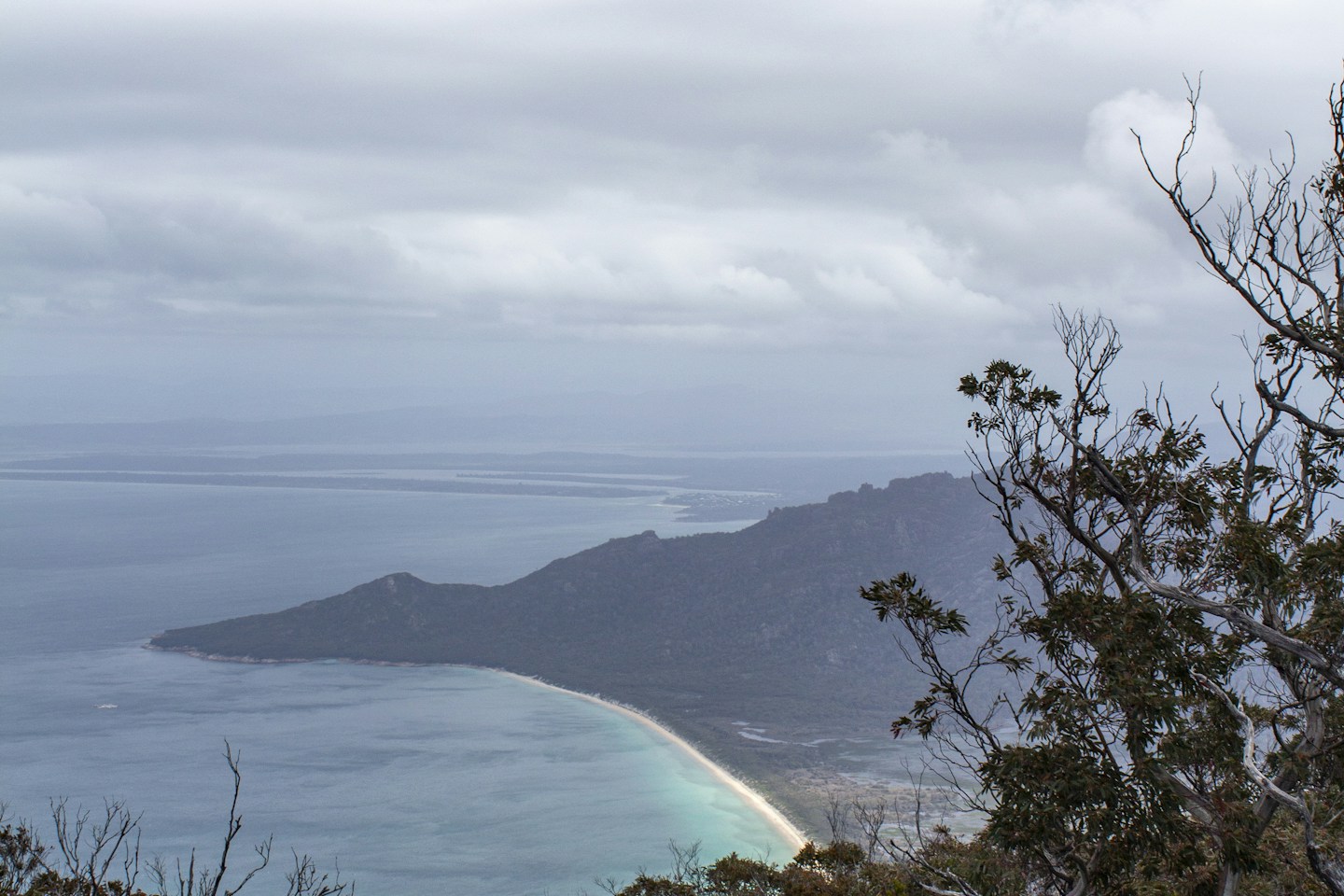
Freycinet National Park contains outings with very different demands. Decide what kind of experience you want before selecting a route: a short coastal view, a substantial walk or a longer journey through varied terrain. The celebrated Wineglass Bay lookout involves climbing and steps; its fame and proximity to a parking area do not make it a level stroll. Read the current Parks and Wildlife Service description and match it to the group's ability.
The lookout and the beach beyond should be considered separately. Seeing water below does not mean reaching it is a minor extension, especially when the return includes regaining height. If you choose a longer route, plan the whole circuit or out-and-back rather than allowing the attractive next section to make the decision at every junction. Food, water, weather and remaining daylight should support the route you actually intend to complete.
A shorter Freycinet outing can still be substantial in experience. Granite, vegetation and the relationship between land and sea offer plenty to observe without maximizing distance. Pick a suitable route and give it enough time for pauses. The point is not to prove that you have gone beyond the famous view. It is to understand something of the setting, and that requires attention more than a particular number of kilometers.
Choose the Bay of Fires by a specific access point
The Bay of Fires describes a coastal area rather than one single viewpoint waiting at the end of a road. Select where you want to go and how the chosen access works. A general destination label can otherwise lead to repeated driving while trying to find a scene remembered from a photograph. Look at legal parking, the walking surface and the return before deciding which stretch fits the afternoon.
The orange lichen on coastal rocks contributes to the area's visual character, but the rocks and their surroundings are part of a fragile natural setting. Keep to appropriate access, avoid trampling vegetation and do not alter the scene for a picture. Observe the difference between a suitable public approach and a tempting scramble closer to the water. Attractive color and clear-looking sea do not establish that a rock platform is safe or a shoreline passage is appropriate.
Give one section time instead of immediately comparing it with the next. Watch changing light, look at the relationship between boulders and sand and notice how wind affects the water. Repetition can be worthwhile: returning to the same shore under different conditions may reveal more than another rapid stop farther along the coast. A familiar route back also makes the afternoon easier to shorten when the weather or the group's energy changes.
Treat a beach walk and a swim as different choices
A beautiful beach can offer a rewarding walk while being unsuitable for swimming at that time. Water conditions, temperature and available supervision are separate questions from appearance. Use current local guidance and choose activities appropriate to the place and your experience. Do not let the clarity of the water or an inviting photograph make the decision. Remaining on shore is a complete coastal experience, not an incomplete version of being in the sea.
Walking beside water also requires awareness of conditions. Give waves and slippery rocks appropriate space, follow signs and avoid committing to a passage simply because someone else is using it. Their knowledge, equipment or tolerance may differ from yours. If a coastal section becomes uncomfortable, return by the established approach while it remains clear. The next beach does not need to be reached for the outing to have a satisfactory ending.
Wind can make an open shore less pleasant than a sheltered town or woodland route. Keep those alternatives available rather than assuming a coastal road trip must spend every daylight hour on sand. A short beach visit followed by a meal and a local walk may be the best shape of the day. Variety keeps the trip connected to actual conditions and helps each setting feel distinct instead of merging into a sequence of similar stops.
Wildlife changes the driving timetable
Wildlife can be active near roads, especially during low-light periods. Plan to avoid unnecessary late driving and keep attention on the road rather than searching the surrounding landscape for animals. Reduce the day's distance before relying on willpower to manage fatigue after an ambitious walk. The driver needs a holiday too, and the rest of the group benefits when the final stretch is calm rather than an endurance exercise.
If you see wildlife, do not stop impulsively where it would obstruct traffic or create another hazard. Use appropriate places and observe without approaching, feeding or attempting to influence behavior. A sighting from a respectful distance may be brief, and that is acceptable. The value lies in the animal remaining wild and undisturbed, not in obtaining a close image. Follow specific local guidance for the species and setting where it is provided.
Leave room for ordinary rests. A roadside journey becomes more enjoyable when coffee, food and facilities are planned as proper breaks instead of hurried interruptions. Small towns can provide those pauses while also showing something of local life. Stop because you have time to walk a few streets or enjoy a meal, not merely because the vehicle needs fuel. Those moments often distinguish an east-coast stay from a sequence of landscape photographs.
Park information belongs in the morning routine
Before a national park outing, check entry arrangements, current track notices and weather information through the relevant official sources. A route described as short still needs appropriate footwear and supplies, while a longer bushwalk may require substantially more preparation. Read the actual track description rather than treating all trails in the same park as comparable. A single destination name can contain many different levels of commitment.
Carry route information in a form that remains useful without continuous connectivity. Identify the starting point, expected return and the way the route is marked. Tell an appropriate person your plans when the outing warrants it, and avoid changing into a more remote route casually because a junction appears inviting. The route chosen at breakfast should be based on ability and conditions, not simply on the desire to keep extending a successful morning.
Take care not to spread the impacts of a busy path. Use established routes, respect barriers and leave plants, rocks and wildlife as you find them. Passing someone can usually wait for an appropriate space rather than require stepping through vegetation. These are small decisions, but a coast visited for its natural character depends on them. Good access is a shared arrangement that remains enjoyable when each group leaves it suitable for the next.
Let towns complete the coast
Bicheno, St Helens and other east-coast settlements can contribute more than practical support. Choose a meal, a local business or a short public walk that gives the stop a purpose of its own. Listen to local advice about the day's conditions without expecting someone to produce an elaborate itinerary on demand. A considered question about a specific plan is easier to answer than a request for the entire coast's hidden highlights.
Use Discover Tasmania for regional orientation and Parks and Wildlife Service information for the protected areas and tracks you intend to visit. Keep the itinerary small enough to stay when a place deserves it. A few carefully chosen shores, time in towns and walks matched to the group can create a complete east-coast journey. The spaces between named attractions then become part of the holiday's substance, rather than distances to be overcome before the next photograph.
For current destination information, access guidance and local updates, visit the official Tasmania travel resource. Check transport and attraction details directly before booking.
This is a general planning guide, not a live conditions report. Found something that needs updating? Send a correction.