Namib desert landscapes: planning for distance and light
A desert visit is shaped by logistics as much as scenery. Think carefully about distances, daylight and heat so that dune landscapes can be enjoyed without turning a day into a driving marathon.
Inside this story
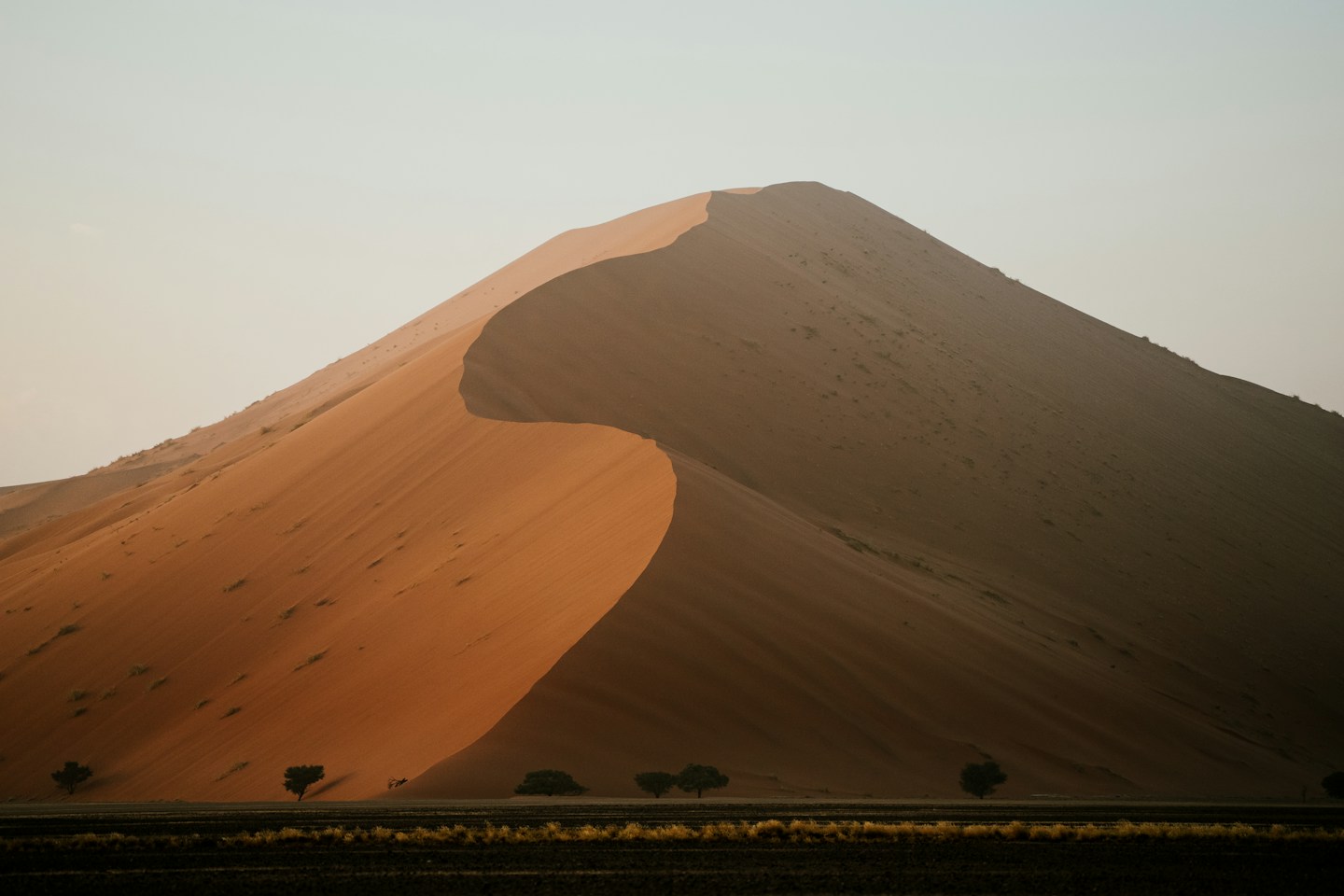
The Namib is often introduced through an almost abstract image: a curved dune, a dark tree and a wide pale surface beneath an immense sky. Visiting that landscape is much less abstract. Your accommodation, vehicle, water supply and understanding of access arrangements determine when you can reach it and how comfortably you can remain there. A thoughtful desert journey therefore begins before the camera comes out. Rather than adding more kilometers to an already ambitious route, give one area enough time for an early outing, a quiet afternoon and another encounter with the light. The desert becomes more legible when distance is something you understand instead of something you continually try to overcome.
- Sossusvlei lies within a protected desert landscape with managed access.
- Fuel and water planning cannot depend on frequent roadside services.
- A rest day near the desert can be more valuable than adding another long transfer.
First locate the room on the road
A property described as being near Sossusvlei can still imply a substantial approach before the main visit begins. Examine its exact location in relation to the access point you intend to use, then ask the operator to explain a realistic morning. Include the drive to the entrance, entry procedures, onward movement within the visitor area and the journey back. A promising sunrise plan is only meaningful if it fits the actual access rules for your accommodation and date. Never infer special privileges from a property's name or a photograph of dunes on its website.
The same geographical care improves the rest of the stay. Find out where meals are provided, whether provisions need buying before arrival and how supplies are replenished during a longer visit. A secluded lodging can be deeply appealing while also making a casual restaurant detour impractical. If several travelers are sharing a vehicle, agree on the broad daily rhythm before booking. Someone who wants repeated dawn departures and someone who values a long breakfast may need a plan with separate activities. The best accommodation is the one that makes your intended experience workable, including the hours when you are resting rather than sightseeing.
Understand what the famous names describe
The wider Namib Sand Sea adds a useful ecological perspective to the familiar dune outlines. UNESCO describes a coastal desert shaped by wind and supplied with crucial moisture by fog, with sand transported through the combined actions of rivers, ocean currents and wind. Those relationships complicate the impression of an empty, motionless landscape. Ask a guide to explain which processes can be recognized at the places you visit, while remembering that the whole protected area cannot be understood from one accessible corner. UNESCO’s account provides background at whc.unesco.org; it is context for the landscape, not a substitute for current local access guidance.
Sossusvlei and Deadvlei belong to a larger protected desert landscape; neither name should be used as shorthand for every dune experience. Before committing to an outing, ask which places it includes, where the vehicle stops and how much walking remains. This is particularly important when comparing excursions that use similar promotional images. One may offer a broader scenic drive, another a specific walking destination, and another a more demanding dune climb. Their suitability cannot be judged from the color of the sand in the advertisement.
A map and a clear explanation from a knowledgeable operator are more useful than a sequence of saved photographs. They reveal whether an apparently simple morning actually includes several changes of vehicle or long exposed stretches on foot. Ask about toilet opportunities and where water should be carried rather than left in the car. Those questions are not separate from appreciating the place: they give you enough comfort and confidence to look closely. Once there, spend some time without photographing. Observe how a slope's angle changes its apparent color and how the boundary between shade and sun makes distance difficult to judge. The landscape's scale emerges gradually when you stop treating each familiar feature as an isolated trophy.
A guided explanation can also change what you notice between the famous stops. Ask how the particular landforms relate to the surrounding environment, and which visible traces should be left undisturbed. Let the guide distinguish established knowledge from interpretation rather than demanding a simple story for every shape. The desert can appear almost motionless during a short visit, yet the effects of wind, light and accumulated geological time are all present at different scales. Learning to recognize those scales makes the quiet intervals valuable. The journey between named destinations then becomes part of understanding the place instead of an empty space before the next photograph.
Sand changes the meaning of a short walk
Walking on sand can require more effort than the same distance on a firm path, especially on an incline. Heat, direct sun and the absence of nearby shelter compound that effort. Choose an outing by its actual terrain and exposure, not by a small number of kilometers. Tell the guide about balance concerns, mobility limitations and the group's usual level of activity before setting off. A shorter alternative should be discussed while it is still a choice, rather than improvised after somebody becomes distressed halfway through a climb.
Carry water in a way that remains usable while walking, together with sun protection and clothing appropriate to the conditions. Ask the operator what quantity and equipment the specific outing requires. Avoid turning a morning visit into a strenuous midday expedition because the first part went well. The return can feel very different when temperatures rise or a descent leads into another exposed approach. Dune climbing is optional. A lower viewpoint can reveal dune structure, the interaction of light and shadow and the relation between sand and surrounding ground without a summit. There is no hierarchy of desert experience in which the person who climbs highest necessarily understands the most.
Make the vehicle decision with the route in front of you
Vehicle suitability depends on the planned section, current conditions and the rental agreement. Do not assume that a vehicle described generally as capable of desert travel is authorized or appropriate everywhere you hope to drive. Explain the full route to the rental company, ask about surfaces and restrictions and understand what assistance is available. If a section requires a transfer or a specialist vehicle, arrange that deliberately. Following another driver's tracks provides no assurance about the ground ahead or your own agreement.
Remote driving also needs ordinary preparation made more explicit. Know how the vehicle's equipment works, check the spare and understand the procedure for reporting a problem before leaving a service center. Plan fuel stops conservatively and do not rely on a possible pump appearing later in the day. Keep water available for travel delays as well as the walk itself. Reduce each day's distance enough to drive attentively, particularly when unfamiliar surfaces demand concentration. An itinerary that requires a rushed arrival after dark needs revising before departure. The desert road is not merely a corridor between attractions; it is a significant part of the day's effort, with its own conditions, responsibilities and opportunities to stop safely.
Give the afternoon a different purpose
It is easy to undervalue the hours when strenuous activity is least appealing. A desert afternoon can be used to rest, read interpretation material, sort photographs in the shade or simply watch the light from an appropriate place near the accommodation. This is a more convincing alternative than inventing another distant excursion to fill the schedule. Ask what low-effort activities are suitable locally, and do not leave established areas for an unplanned wander simply because the terrain looks open.
Rest also changes the following morning. A traveler who has eaten, replenished supplies and slept properly can make clearer decisions than one arriving after a long transfer and immediately preparing for another early departure. Where possible, allow more than a single night around the principal desert visit. This creates breathing room for arrival, the outing and departure without making every hour operational. It also reduces the emotional weight placed on one moment of light. Cloud, haze or wind can change an expected view; staying longer helps reveal that these are versions of the landscape rather than failures of it. Repetition becomes useful when you begin to recognize how the same outline behaves under different conditions.
Photograph without treating the desert as empty
An apparently spare landscape is not an invitation to leave the designated route. Follow park signs and guide instructions, including restrictions that may seem invisible in a photograph. Fragile ground and habitats can be damaged by repeated foot traffic, and an existing track does not automatically establish a permitted path. Leave plants, wood and stones where they belong. Small collected objects may seem inconsequential individually, but taking them changes the place for everyone who follows.
Windblown sand also invites practical restraint with equipment. Protect cameras and lenses in a suitable bag, avoid unnecessary lens changes in blowing conditions and use a secure place to manage small items. Keep packaging and tissues contained so that a gust cannot turn them into litter. If a photograph requires another person to cross a restricted area or stand somewhere uncomfortable, change the photograph. Include other visitors in your awareness and avoid occupying a shared viewpoint indefinitely. The strongest images often arise from learning a scene's geometry rather than pursuing ever more isolated positions. A dune's line, a shadow and a patch of open space can communicate the desert without erasing the conditions under which the image was made.
Build the onward journey around recovery
The transition away from the desert deserves the same care as arrival. A dawn outing followed immediately by a long road stage can combine early fatigue, walking effort and hours of concentration. Consider a slower departure or another night if the route would otherwise become demanding. Build stops around real facilities and safe parking rather than a vague intention to pause somewhere. Keep essential water and food accessible instead of packing them beneath luggage.
For broader orientation, use Namibia's official tourism resource at visitnamibia.com.na, then confirm protected-area arrangements, road sections and excursion details with the responsible operator. Obtain precise answers in writing when the viability of the journey depends on them. The purpose is not to eliminate every variable; a desert visit will always be shaped by changing light and conditions. It is to distinguish those welcome uncertainties from logistical problems that could have been settled earlier. When the practical questions are resolved, the journey can finally become spacious. There is time to see how far a dune extends beyond the familiar crop of a photograph, how a shadow changes while you sit still and how much attention a seemingly simple landscape can hold.
A few practical questions
Is climbing a major dune essential?
No. Choose the outing that matches your ability and the conditions. Lower viewpoints and guided interpretation can provide a rich experience without a demanding climb.
What should be confirmed before booking accommodation?
Ask about the exact entrance journey, access arrangements, meal availability and the suitability of your vehicle. These details shape both the main outing and the comfort of the whole stay.
For current destination information, access guidance and local updates, visit the official Namib Desert travel resource. Check transport and attraction details directly before booking.
This is a general planning guide, not a live conditions report. Found something that needs updating? Send a correction.